
World Cup 2026 Betting Guide for Canadian Fans
 Available in US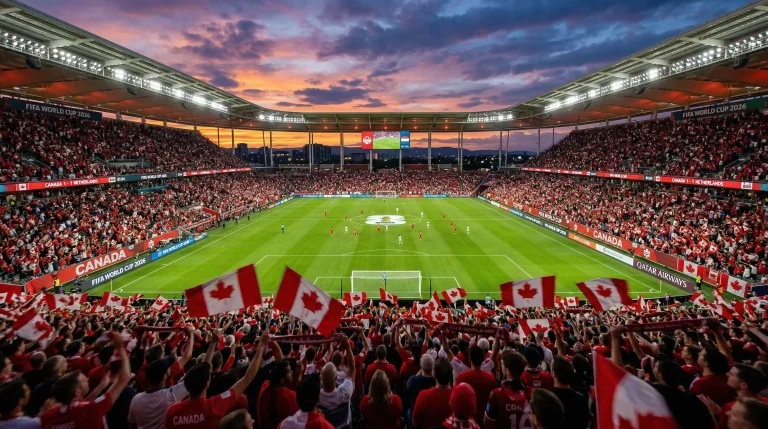
I remember sitting in a Toronto sports bar in November 2022, watching Alphonso Davies score Canada's first-ever World Cup goal against Croatia. The room erupted — not because we were winning (we weren't), but because for a brief moment, decades of waiting had crystallized into something real. Canada had scored at a World Cup. That night ended in heartbreak, three losses and an early exit, but it planted a seed that's about to bloom on home soil.
The 2026 FIFA World Cup arrives in North America this June, and for Canadian bettors, this tournament represents something unprecedented. We're not just spectators anymore. Canada hosts 13 matches across Toronto and Vancouver, including all three of our group stage games. BMO Field and BC Place will transform into cauldrons of red and white, and the betting markets have taken notice. After nine years covering international tournament wagering, I've never seen a Canadian audience this engaged with soccer futures — and frankly, the sportsbooks aren't quite ready for what's coming.
This guide exists because World Cup betting in Canada operates under rules that didn't exist four years ago. Bill C-218 legalized single-event sports wagering in August 2021, just months before Qatar. Ontario opened its iGaming market in April 2022. Most Canadian bettors have never placed a World Cup bet through a licensed domestic platform. The landscape has changed, the stakes are higher, and the home advantage creates angles that offshore books historically undervalue.
Whether you're chasing value on CanMNT outright markets, hunting group stage parlays, or simply trying to understand how decimal odds translate to your potential payout, I've structured this hub to serve as your central resource through all 39 tournament days. Let's build a betting strategy worthy of a home World Cup.
Key Takeaways for Canadian World Cup Bettors
- Canada plays all three group stage matches on home soil — BMO Field (Toronto) and BC Place (Vancouver) — creating measurable home advantage that current odds don't fully reflect.
- Single-event sports betting became legal across Canada in August 2021; Ontario's open market launched April 2022, giving most bettors their first licensed World Cup wagering experience.
- The expanded 48-team format means 104 matches over 39 days, with eight best third-place teams advancing — a structural shift that favours defensive underdogs in group play.
- Group B pits Canada against Switzerland, Bosnia and Herzegovina, and Qatar; the decisive match against Switzerland on June 24 in Vancouver likely determines the group winner.
- Value betting on Canadian player props, CanMNT group advancement, and matches played in Toronto and Vancouver offers edges that major sportsbooks routinely misprice for smaller markets.
The 2026 World Cup at a Glance — 48 Teams, 16 Cities, One Summer
FIFA hasn't expanded the World Cup since 1998, when they jumped from 24 to 32 teams. Now they're doing it again — and betting markets are still figuring out what 48 participants actually means. The math changes everything. Twelve groups of four, with the top two plus eight best third-place finishers advancing to a Round of 32. That's 32 teams reaching the knockout stage from 48 starters, a qualification rate of 67% compared to 50% in previous tournaments. If you've built your World Cup betting strategy around group stage eliminations, prepare to recalibrate.
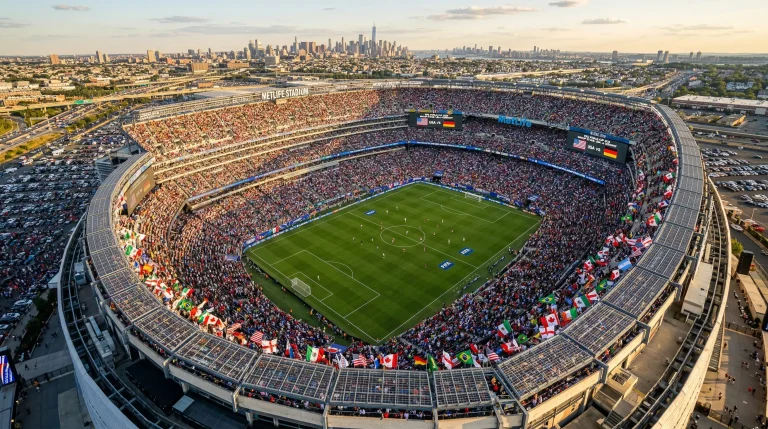
The tournament spans 39 days, from June 11 through July 19, with 104 total matches — nearly double the 64-game format we've known since 1998. Three host nations split the venues: the United States claims 11 stadiums and 78 matches including the final at MetLife Stadium in East Rutherford, New Jersey. Mexico contributes three venues with 13 matches, highlighted by the opening game at the legendary Estadio Azteca on June 11. Canada rounds out the hosting trio with BMO Field in Toronto and BC Place in Vancouver, combining for 13 matches plus knockout rounds.
The June 11 opening match — Mexico versus South Africa at Estadio Azteca — marks the third time that historic venue has hosted a World Cup opener, following 1970 and 1986. No other stadium in history has opened multiple World Cups.
For bettors, the expanded format introduces structural wrinkles that favour certain strategies. With eight third-place teams advancing, a single point often proves sufficient to survive the group stage. I expect to see more defensive, result-oriented football in group play, which historically correlates with lower-scoring matches and profitable under totals. The math also means fewer dead rubber matches — when 67% of participants advance, almost every group stage game carries stakes for at least one team.
Geography matters for this tournament in ways previous World Cups couldn't replicate. Time zones span from Mexico City (Central) to Vancouver (Pacific), with most venues clustered in Eastern and Central time. Canadian viewers — and bettors tracking live markets — benefit from scheduling that accommodates North American prime time. Group stage matches kick off as early as 12:00 ET and as late as 21:00 ET, with the majority falling in afternoon and evening windows. Compare this to Qatar 2022, where Canadians watched 10:00 and 13:00 ET kickoffs on weekdays. The accessibility difference directly impacts live betting volume and market liquidity.
The confirmed groups feature several heavyweight collisions. Argentina defends their title from Group J alongside Algeria, Austria, and Jordan. France drew Senegal, Iraq, and Norway in Group I. England faces Croatia, Ghana, and Panama in Group L — with Ghana versus Panama playing at BMO Field in Toronto on June 17. Germany lands in Group E with Curaçao, Ivory Coast, and Ecuador, including a June 20 match against Ivory Coast at BMO Field. The draw scattered intrigue across all twelve groups, but as a Canadian bettor, my attention locks onto Group B: Canada, Switzerland, Bosnia and Herzegovina, and Qatar. Three home matches. One chance to make history feel earned.
Understanding the tournament structure is essential, but Canada's path through Group B demands deeper examination — that's where the real betting angles emerge.
Canada in Group B — Home Soil, Real Stakes
Jesse Marsch paced the sideline at BMO Field during a Nations League qualifier last fall, arms crossed, jaw tight. I was there, five rows up, watching him diagram adjustments on a whiteboard during a stoppage. The man coaches like someone who knows exactly how short his runway is — and in June, that runway ends at a World Cup group stage played entirely within Canadian borders. No excuses. No unfamiliarity with conditions. Just three matches that determine whether this generation of Canadian football finally delivers.
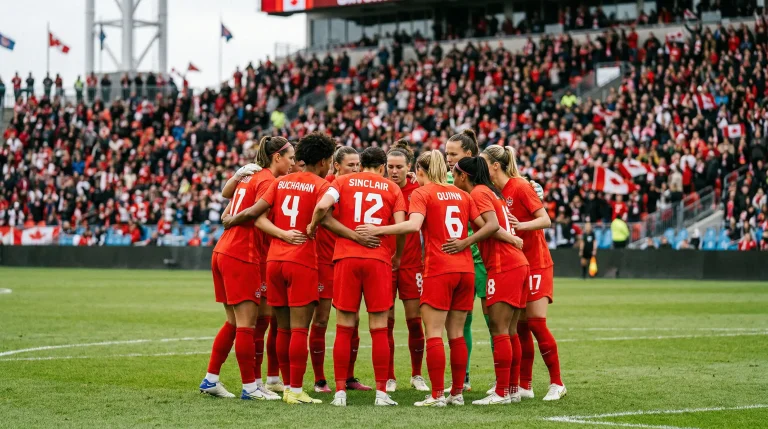
Group B offers a manageable draw without being soft. Switzerland presents the clearest obstacle — they reached the Euro 2024 quarter-finals, where they lost to penalty specialists England, and their tournament pedigree spans decades of consistent advancement through group stages. Granit Xhaka orchestrates midfield with Bundesliga-winning experience, and their defensive organization makes them difficult to break down. Bosnia and Herzegovina arrive as giant-killers, having eliminated Italy through a penalty shootout in the UEFA playoff final — a result that stunned Europe and announced their arrival as dangerous tournament opponents. Qatar brings 2022 hosting experience but struggled in that competition, losing all three group matches while scoring a single goal.
The schedule favours Canada structurally, though the pressure inverts expectations. The opener comes June 12 at BMO Field against Bosnia and Herzegovina, a 15:00 ET kickoff. This is the match that sets tone. Bosnia lacks tournament experience at this level, and their playoff heroics against Italy could generate a psychological hangover. Six days later, Canada faces Qatar at BC Place in Vancouver, an 18:00 ET start that gives the squad time to fly west and acclimate. The group finale arrives June 24, again at BC Place, against Switzerland at 15:00 ET — almost certainly the decisive match for group positioning.
| Date | Match | Venue | Kickoff (ET) |
|---|---|---|---|
| June 12 | Canada vs Bosnia and Herzegovina | BMO Field, Toronto | 15:00 |
| June 18 | Canada vs Qatar | BC Place, Vancouver | 18:00 |
| June 24 | Switzerland vs Canada | BC Place, Vancouver | 15:00 |
From a betting perspective, Canada enters as slight group favourites despite Switzerland's superior FIFA ranking. The home advantage calculus drives this — sportsbooks apply a measurable adjustment for host nations, typically equivalent to a goal or more in expected performance over a tournament's course. Canada's situation amplifies that adjustment because all three matches occur domestically. No travel fatigue, no unfamiliar stadiums, no neutral crowds. When Alphonso Davies accelerates down the left wing at BMO Field, 30,000 people will be screaming his name. That energy translates to quantifiable performance gains that historical models struggle to price accurately.
The squad itself has evolved since Qatar's disappointment. Davies remains the talisman, his Bayern Munich pedigree lending credibility to a squad that lacks depth at his level. Jonathan David's scoring rate at Lille makes him a legitimate Golden Boot threat at generous odds. Cyle Larin, Tajon Buchanan, and Stephen Eustáquio provide midfield and attacking depth that previous Canadian teams simply didn't possess. Marsch's high-pressing system demands fitness and aggression — attributes that suit tournament football, where the physical grind of league seasons doesn't apply.
For a deeper examination of Canada's odds across outright, group winner, and player prop markets, the dedicated CanMNT odds and predictions page breaks down every angle. But the core truth is simple: this group is winnable. Not as underdogs hoping for a miracle, but as legitimate favourites with home advantage and a squad capable of beating anyone on their day. Pricing that reality accurately is where value emerges.
Canada's three home matches and favourable group draw create genuine tournament advancement odds — this isn't optimistic projection, it's structural advantage that betting markets haven't fully priced.
Betting on the World Cup in Canada — What You Need to Know
Four years ago, if you wanted to bet on a World Cup match in Canada, you had exactly one legal option: provincial parlay cards through lottery corporations like Proline+ or Mise-o-jeu. Single-game wagering didn't exist. You couldn't back Canada to beat Morocco straight-up — you had to bundle that pick with two or three other selections, paying the house edge multiple times over. That era ended on August 27, 2021, when Bill C-218 received royal assent, legalizing single-event sports betting across the country.
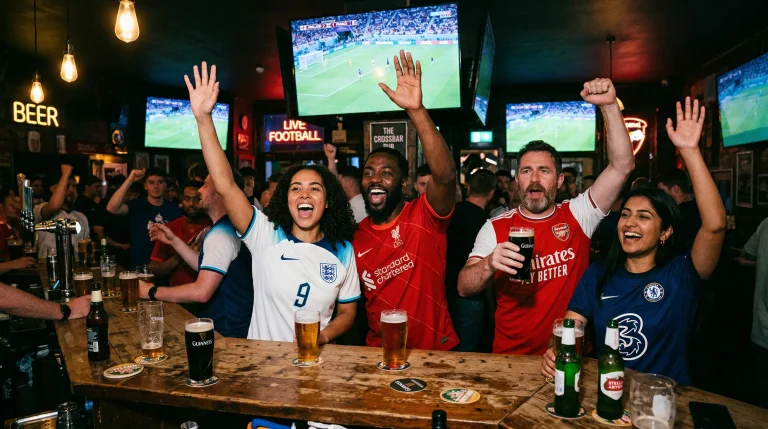
The regulatory structure now operates provincially. Ontario launched its open iGaming market in April 2022, becoming the only province where private operators compete alongside the provincial lottery. The Alcohol and Gaming Commission of Ontario (AGCO) and iGaming Ontario (iGO) jointly regulate this market, licensing sportsbooks that meet stringent requirements for consumer protection, responsible gambling, and operational transparency. Other provinces maintain single-operator systems: British Columbia runs PlayNow through BC Lottery Corporation, Québec offers Mise-o-jeu via Loto-Québec, and Alberta operates Play Alberta under AGLC oversight.
For practical purposes, this means Ontario residents access the widest selection of sportsbooks and betting markets for World Cup wagering. Bettors in other provinces use their provincial platforms, which have expanded significantly since legalization but still offer fewer options than Ontario's competitive marketplace. The sportsbook comparison guide details provincial availability, but the key point is that legal options now exist everywhere in Canada — a dramatic shift from the parlay-only era.
Single-event wagering — betting on the outcome of one specific event without bundling multiple selections. Legalized in Canada through Bill C-218, effective August 2021.
Advertising restrictions have tightened alongside market expansion. In 2024, AGCO banned the use of athletes and celebrities in iGaming advertising within Ontario, responding to public concern about advertising saturation during sports broadcasts. Bill S-211, the National Framework on Sports Betting Advertising Act, passed the Senate in October 2025 and awaits review in the House of Commons. If enacted, it would establish federal standards for advertising frequency, placement, and content — potentially limiting promotional messaging during live World Cup broadcasts. The responsible gambling emphasis isn't merely regulatory theatre; operators must display warnings, offer deposit limits, and provide self-exclusion options as licensing conditions.
Minimum betting age follows provincial alcohol regulations: 19 years in most provinces, 18 in Québec, Alberta, and Manitoba. The currency is Canadian dollars, and most domestic sportsbooks display decimal odds as the default format. Decimal odds tell you exactly what you'll receive per dollar wagered — a line of 2.50 means a C$100 bet returns C$250 total (your C$100 stake plus C$150 profit). American moneyline odds also appear frequently, given proximity to US markets, so understanding both formats prevents confusion when line shopping across platforms.
The complete betting guide walks through wagering mechanics in detail, but the landscape summary is straightforward: Canada's betting infrastructure matured rapidly between 2021 and 2026. This World Cup marks the first where most Canadian bettors have legitimate domestic alternatives to offshore books. The legal protections, the CAD-denominated accounts, the responsible gambling frameworks — these aren't abstract benefits. They're the foundation for building a sustainable approach to tournament wagering.
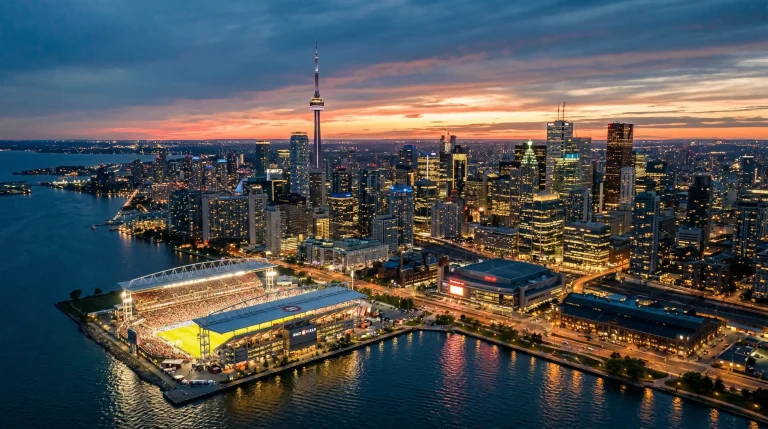


Tournament Odds Snapshot — Who's Favoured in 2026
The outright betting board shifted dramatically in the months following the December draw. Brazil and France opened as co-favourites around 5.50 decimal odds, but France has since drifted slightly while Argentina firmed as defending champions generating repeat business. As of early April 2026, the consensus favourite hierarchy places France, Argentina, and Brazil clustered near the top, with England and Spain commanding the next tier. Germany, the Netherlands, and Portugal round out the single-digit pricing.
What strikes me about this market isn't the favourites — it's where the hosts sit. USA trades around 15.00 to 18.00 depending on the book, a price that reflects home advantage plus legitimate squad talent. Mexico hovers near 35.00, reasonable for a co-host with historical knockout-round struggles. Canada? The range spans 60.00 to 80.00, positioning CanMNT as a live longshot rather than a hopeless outsider. That pricing implies roughly a 1.2% to 1.7% chance of lifting the trophy — ambitious, certainly, but not the four-figure prices you'd see for genuine minnows.
| Team | Approximate Odds (Decimal) | Implied Probability |
|---|---|---|
| France | 5.00 – 5.50 | 18% – 20% |
| Argentina | 5.50 – 6.00 | 17% – 18% |
| Brazil | 6.00 – 6.50 | 15% – 17% |
| England | 8.00 – 9.00 | 11% – 13% |
| Spain | 9.00 – 10.00 | 10% – 11% |
| Germany | 11.00 – 13.00 | 8% – 9% |
| USA | 15.00 – 18.00 | 6% – 7% |
| Canada | 60.00 – 80.00 | 1.2% – 1.7% |
The defending champion narrative carries weight but demands scrutiny. Argentina won in Qatar with Lionel Messi operating at peak tournament form, orchestrating a supporting cast that clicked at exactly the right moment. Messi turns 39 during this World Cup. Whether he participates remains uncertain — he hasn't confirmed 2026 plans, and his Inter Miami obligations complicate national team preparation. Argentina's depth ensures competitiveness regardless, but pricing them alongside France assumes Messi doesn't matter. He does. The market hasn't fully grasped the conditional nature of Argentina's ceiling.
For group winner markets, Canada trades as modest favourites in Group B at approximately 2.00 to 2.20, with Switzerland the primary challenger near 2.40 to 2.60. Bosnia and Herzegovina sits around 4.50 to 5.50, and Qatar rounds out the group at 7.00 to 9.00. These prices suggest a two-horse race for first place, which aligns with my assessment. The value question is whether Canada's home advantage justifies their favouritism over a Swiss side with superior recent tournament results. I lean toward yes, but the margin is thin.
Golden Boot markets feature Kylian Mbappé and Harry Kane as perennial favourites, both trading near 8.00 to 10.00. The expanded format complicates top-scorer predictions — more games theoretically means more goals, but the Round of 32 addition also means more knockout matches where top teams might rotate strikers. Jonathan David appears around 50.00 to 60.00 for Golden Boot, a price that offers genuine value if Canada advances deep and David receives consistent minutes. These markets reveal where books currently see the tournament unfolding — and where patient bettors can find edges.
These odds establish the betting landscape, but Canadian viewers need one more piece: where to watch the action unfold on home soil.



Games in Toronto and Vancouver — Your Local Match Guide
I walked into BMO Field last summer for a Toronto FC match and spent twenty minutes just absorbing the sightlines. The stadium sits in Liberty Village, wedged between the Gardiner Expressway and Lake Ontario, accessible by streetcar, bike, or foot from downtown. It holds approximately 30,000 for soccer configurations, intimate by World Cup standards but deafening when filled. This venue hosted the 2007 U-20 World Cup final, the 2017 MLS Cup, and countless Canadian national team matches. It knows how to deliver atmosphere.
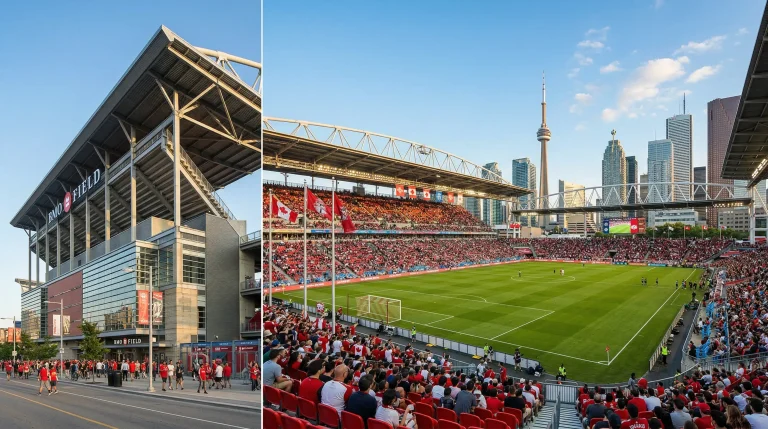
BMO Field hosts seven World Cup matches across the group stage and knockout rounds. Three involve Canada directly, but four additional games bring international heavyweights to Toronto's doorstep. Germany faces Ivory Coast here on June 20, a Group E clash that guarantees world-class talent regardless of group stage standings. Ghana meets Panama on June 17 in a Group L fixture with African and CONCACAF flair. For local bettors, these matches offer opportunities to watch live football while tracking real-time odds movements — an edge that armchair viewers don't have.
| Date | Match | Group | Kickoff (ET) |
|---|---|---|---|
| June 12 | Canada vs Bosnia and Herzegovina | B | 15:00 |
| June 17 | Ghana vs Panama | L | 18:00 |
| June 20 | Germany vs Ivory Coast | E | 15:00 |
BC Place in Vancouver operates as a different animal entirely. The retractable-roof dome seats over 54,000 for major events, making it the largest Canadian venue in this tournament. Its downtown location, steps from the waterfront and SkyTrain stations, provides exceptional accessibility. The roof means weather never becomes a factor — useful for June matches where Vancouver's reputation for rain might otherwise concern visiting teams. CanMNT plays twice here: against Qatar on June 18 and in the crucial Switzerland clash on June 24.
Vancouver also hosts knockout rounds, including Round of 32 and Round of 16 matches. If Canada wins Group B — a realistic outcome given current odds — they'd likely play their Round of 32 match at BC Place, extending the home advantage into elimination territory. The bracket structure positions Group B winners favourably for Vancouver-based advancement, an angle that bettors should factor when assessing Canada's tournament ceiling. The BMO Field match preview provides detailed breakdowns of stadium schedules.
BC Place opened in 1983 and received its retractable roof in 2011. The renovation cost C$563 million, making it one of the most expensive stadium projects in Canadian history — and ensuring that Vancouver's World Cup matches won't be rained out.
From a local perspective, these venues offer advantages beyond simply attending matches. Toronto and Vancouver possess robust sports bar infrastructures, extensive food and transit options, and fan zones that will operate throughout the tournament. Watching Germany versus Ivory Coast at a packed Liberty Village pub, live odds flickering on your phone while Jamal Musiala threads passes through midfield — that's an experience previous World Cups couldn't provide for Canadian fans. The tournament comes to us this time. Build your schedule accordingly.
Getting Started — Types of World Cup Bets
My first World Cup bet came in 2010 — I backed Spain to beat the Netherlands in the final at 2.15 odds. Iniesta's goal arrived in extra time, and I learned immediately that tournament betting rewards patience and structural understanding over frantic match-by-match chasing. The bet types available today dwarf what existed then, but the fundamentals remain: understand what you're wagering on, calculate your risk, and let the tournament unfold.
Match bets form the foundation. The most common is the moneyline, where you simply pick which team wins — or whether the match ends in a draw. Group stage matches can finish level, so the three-way moneyline (Home/Draw/Away) applies. Knockout matches include extra time and penalties to determine a winner, so those markets typically offer two-way moneylines (either team wins outright, no draw option). The spread — called the handicap in soccer — levels the playing field by assigning goals to the underdog. If Germany opens at -1.5 against Curaçao, they must win by two or more for your bet to cash. Asian handicaps refine this further with quarter-goal and half-goal lines that eliminate push possibilities.
Decimal odds — the format showing total return per dollar wagered. Odds of 3.00 mean a C$100 bet returns C$300 total (C$200 profit plus C$100 stake).
Totals (over/under) predict the combined goals in a match. A line of 2.5 goals means you're betting on whether the match produces three or more (over) or two or fewer (under). World Cup group stages historically average around 2.5 to 2.7 goals per match, so lines typically hover in that range with juice adjustments based on attacking tendencies. Prop bets expand into specific events: Will Kylian Mbappé score? Will there be a red card? Will both teams score? These markets offer variety but carry higher house edge than core match bets.
Futures and outright markets ask longer-term questions. Who wins the World Cup? Who wins Group B? Who claims the Golden Boot? These bets lock up your stake for the tournament's duration but offer significant payouts for correct predictions. The timing matters — futures odds shift constantly based on match results, injury news, and public betting patterns. Backing Canada to advance from Group B at 1.40 today might trade at 1.15 after a comfortable opening win, eliminating the value. Understanding when to place futures bets requires tracking market momentum and news cycles.
Parlays (called accumulators elsewhere) combine multiple selections into one bet, with each pick multiplying the odds. A three-leg parlay backing Argentina, France, and Brazil to each win their openers might pay 5.00 combined where individual moneylines would pay 1.60, 1.50, and 1.55. The catch: all three must win, or the entire bet loses. Canadian bettors have historical familiarity with parlays because of the pre-2021 Proline system — but resist the temptation to default to that format now that single-event wagering exists. The math favours single bets for most scenarios.
Calculating a parlay payout
Selection 1: Canada to beat Bosnia (1.75 decimal odds)
Selection 2: Brazil to beat Haiti (1.25 decimal odds)
Selection 3: Under 2.5 goals in France vs Senegal (2.10 decimal odds)
Combined odds: 1.75 × 1.25 × 2.10 = 4.59
C$50 stake returns: C$50 × 4.59 = C$229.50 total (C$179.50 profit)
Live betting — placing wagers after kickoff — explodes during World Cups because tournament football generates unpredictable swings. A red card in the 20th minute, a penalty converted against the run of play, a defensive lapse from a fatigued side — these events shift live odds dramatically. Experienced bettors identify overreactions and fade the public sentiment. Live markets require fast decisions and disciplined bankroll management, but the edge potential exceeds anything pre-match markets offer.
NorthPost 26 · Proprietary Tool
The Closing Line Ledger
Your profit tells you what happened. Your closing line value tells you whether it should have. Log the price you took, the price the market closed at, and this ledger strips the bookmaker's margin out of the close to show the edge you actually bought — plus how many bets it would take to prove that edge isn't luck.
Our Early Picks and Value Plays
I don't publish selections lightly. Nine years of World Cup coverage taught me that pre-tournament picks carry shelf life measured in days — injuries happen, form shifts, and odds move. What I can offer now, two months from kickoff, are angles where I see persistent market inefficiency. These aren't locks; they're starting points for your own analysis.

Canada to win Group B trades near 2.10 at most Ontario sportsbooks. I find this price reasonable rather than generous, but the value strengthens if you believe home advantage exceeds historical tournament models. Swiss resilience deserves respect, yet they've never played a competitive match in Canada, let alone three consecutive games against a motivated host. Bosnia's Italy upset was extraordinary, but playoff magic doesn't always carry into tournament group stages. At 2.10, backing CanMNT to top Group B offers positive expected value given the structural advantages.
Jonathan David to finish as Canada's top scorer appeals as a player prop. David's club form at Lille — 30+ goal contributions this season — confirms elite finishing ability, and Marsch's system funnels chances through central strikers. The alternative is betting on Alphonso Davies, whose brilliance manifests in assists and progressive carries rather than goals. David at even money to outscore any Canadian teammate represents the straightforward interpretation of how this team attacks.
Early-tournament value often sits in qualification and group-winner markets rather than outright champion betting. The odds compression happens later; the mispricing exists now.
For broader tournament analysis, I see persistent undervaluation of defensive group-stage strategies. The expanded format — 32 of 48 teams advancing — mathematically rewards conservative football. Teams that concede few goals can navigate groups with draws and narrow victories, reaching the knockouts where variance favours any qualified side. Morocco demonstrated this at Qatar 2022, grinding through groups before stunning Spain and Portugal. Similar profiles exist in 2026's field: Serbia, Turkey, and Morocco again offer dark horse potential at prices reflecting their FIFA rankings rather than their tournament-style suitability.
I'll publish expanded analysis closer to kickoff, tracking squad news, final tuneup results, and odds movement. The groups and bracket breakdown establishes the tournament's structural framework, while team-specific pages will detail individual angles. For now, the picks preview establishes my analytical lens: home advantage, goal expectancy, and format-specific strategy drive value identification. The market knows the favourites. The edge lies in knowing what the market underweights.
Frequently Asked Questions
Is betting on the World Cup legal in Canada?
Yes. Bill C-218 legalized single-event sports betting across Canada in August 2021. Each province regulates its own market — Ontario operates an open system with multiple licensed operators, while other provinces run through provincial lottery corporations like PlayNow (BC), Mise-o-jeu (Québec), and Play Alberta. Minimum age is 19 in most provinces, 18 in Québec, Alberta, and Manitoba. All licensed sportsbooks must comply with responsible gambling requirements including deposit limits and self-exclusion options.
When does the 2026 World Cup start and end?
The tournament runs from June 11 through July 19, 2026. Mexico hosts the opening match — Mexico versus South Africa at Estadio Azteca on June 11. Canada's first match is June 12 at BMO Field against Bosnia and Herzegovina. The final takes place July 19 at MetLife Stadium in East Rutherford, New Jersey. Across 39 days, 104 matches will be played at 16 venues in three countries.
How many teams participate in the 2026 World Cup?
The 2026 World Cup expands to 48 teams, up from 32 in previous editions. FIFA organized these into 12 groups of four teams. The top two from each group advance, along with the eight best third-place finishers, creating a Round of 32. This format means 32 teams (67% of participants) reach the knockout stage — significantly more than the 50% advancement rate of the 32-team format.
What group is Canada in for the 2026 World Cup?
Canada competes in Group B alongside Switzerland, Bosnia and Herzegovina, and Qatar. All three of Canada's group matches take place on home soil — one at BMO Field in Toronto (June 12 vs Bosnia) and two at BC Place in Vancouver (June 18 vs Qatar, June 24 vs Switzerland). This home advantage makes Canada slight favourites to win the group ahead of Switzerland.
What odds format do Canadian sportsbooks use?
Most Canadian sportsbooks default to decimal odds, the standard format in Europe and much of the world. Decimal odds show total return per dollar wagered — odds of 2.50 mean a C$100 bet returns C$250 total (C$150 profit plus C$100 stake). American moneyline format also appears frequently due to proximity to US markets. Bettors can typically switch between formats in sportsbook settings.
Can I bet on Canada to win the World Cup?
Absolutely. Canada currently trades at approximately 60.00 to 80.00 decimal odds to win the tournament outright, implying around a 1.5% probability. More realistic markets include Canada to win Group B (around 2.10 odds), Canada to advance from the group stage (around 1.35 odds), and various player props like Jonathan David to finish as Canada's top scorer. These secondary markets often offer better value than outright tournament winner bets.
Which World Cup matches are played in Canada?
Canada hosts 13 World Cup matches across BMO Field in Toronto and BC Place in Vancouver. Toronto's schedule includes Canada vs Bosnia and Herzegovina (June 12), Ghana vs Panama (June 17), Germany vs Ivory Coast (June 20), plus additional group and knockout matches. Vancouver hosts Canada vs Qatar (June 18), Switzerland vs Canada (June 24), New Zealand vs Egypt (June 21), plus Round of 32 and Round of 16 knockout games.
Forty years passed between Canada's first World Cup appearance and their second. Now, less than four years later, they host one. The trajectory of Canadian soccer — and Canadian soccer betting — has compressed decades of development into a single election cycle. Bill C-218 rewrote the legal framework. Ontario's open market introduced competition. And the 2026 World Cup delivers the payoff: a home tournament where CanMNT plays all three group matches on Canadian soil, where BMO Field and BC Place become global stages, and where every licensed sportsbook in the country offers markets specifically relevant to our national interest.
This hub will expand throughout the tournament. Match previews will arrive before each fixture. Odds trackers will update as markets move. Player props and bracket analysis will layer onto this foundation as we progress from group stage to knockouts. Bookmark the page, return often, and build your World Cup 2026 betting strategy with the depth this moment deserves.
I've spent nine years covering international tournament wagering, watching from press boxes and sports bars across three continents. None of it compares to what's coming. When Alphonso Davies takes the ball at BMO Field on June 12, when 30,000 voices shake the stands, when the betting markets react in real time to a Canadian attack — that's why we do this. That's why this guide exists. Welcome to Canada's World Cup. Let's make it count.
Back to Top