
Bosnia and Herzegovina at the 2026 World Cup — The Team That Knocked Out Italy
 Available in US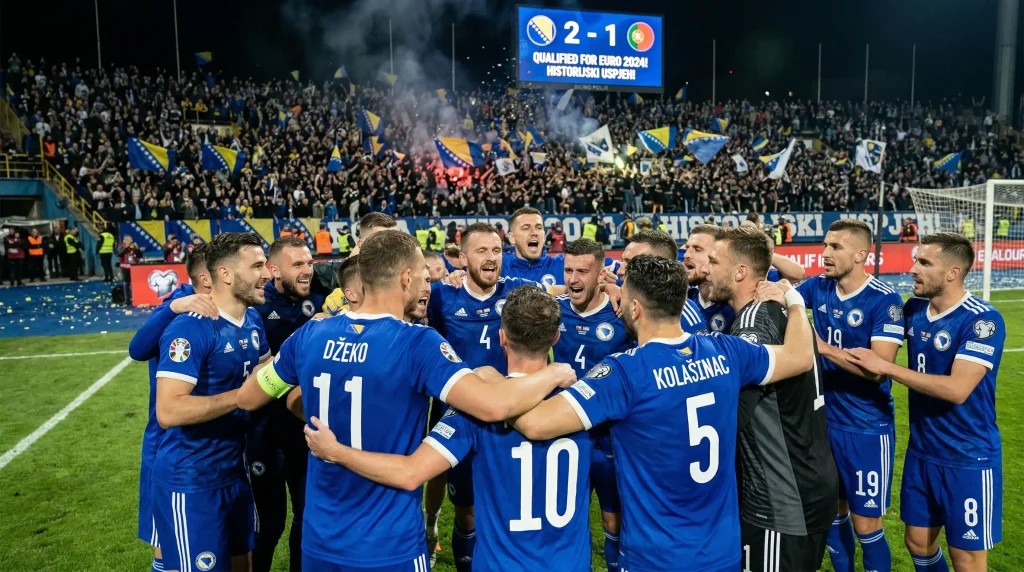
Table of Contents
They beat Italy on penalties in the European playoff final. They eliminated four-time World Cup champions from the tournament. Bosnia and Herzegovina arrive at the 2026 World Cup with the confidence that giant-killing produces — and their first group-stage match brings them to BMO Field on June 12 to face Canada on opening day. For CanMNT supporters, this fixture represents both opportunity and danger: opportunity because Bosnia’s FIFA ranking suggests beatable opponent, danger because a team capable of defeating Italy on the biggest stage cannot be dismissed regardless of seeding.
The Bosnian squad features players from top European leagues whose collective achievement exceeded what individual talent assessments might predict. Their path through qualification demonstrated resilience, tactical organization, and the decisive moments that knockout football rewards. Understanding Bosnia means understanding an opponent whose ceiling exceeds their floor by margins that create betting variance — on their best day, they compete with anyone; on their worst, they struggle against limited opposition.
The Giant-Killing Road to 2026 — How Bosnia Eliminated Italy
The March 2026 playoff final between Bosnia and Italy in Zenica produced one of European football’s great shocks. Italy, the four-time World Cup champions seeking automatic revenge for their embarrassing 2022 qualifying failure, faced a Bosnian side whose previous World Cup appearance came in 2014. The match ended 1-1 after extra time, with Bosnia converting their penalties while Italy’s storied history crumbled from twelve yards.
That victory validated everything Bosnian football had worked toward since independence produced their national team in the 1990s. The golden generation of Džeko, Pjanić, and others had faded without World Cup knockout-round success. This new generation — featuring players whose club careers exceeded their predecessors in some cases — announced arrival through the most dramatic possible circumstance. The confidence that defeating Italy produces cannot be manufactured through any other pathway.
The tactical approach that produced that victory deserves analytical attention. Bosnia defended with discipline that limited Italian creativity, then struck through counter-attacks that exploited Italian defensive complacency. The willingness to absorb pressure rather than compete for possession suited the knockout format perfectly. Whether this approach translates to group-stage football — where drawing matches does not guarantee advancement — remains the question that betting markets must incorporate.
For Canadian assessment, the Italy playoff provides template for what Bosnia might attempt at BMO Field. They will not expect to dominate possession against technically proficient Canadian midfielders. They will instead organize defensively, seek to frustrate Canadian buildup, and attempt to strike through transitions when Canadian attacking commitment creates space. Canada must recognize this tactical profile rather than expecting the open football that some opponents provide.
Key Players — Demirović, Burnić, and the Squad
Ermedin Demirović leads Bosnian attacking hopes through Stuttgart performances that have produced consistent goalscoring in one of Europe’s most competitive leagues. His movement and finishing provide the clinical edge that Bosnian counter-attacks require — chances must convert, because Bosnia’s playing style produces fewer opportunities than possession-dominant opponents generate. Demirović’s ability to score from limited chances makes him the primary individual threat Canadian defenders must contain.
Dženis Burnić provides midfield energy that enables Bosnian defensive organization while offering forward thrust when transitions occur. His two-way contribution — defensive positioning followed by rapid advancement when possession changes — characterizes modern midfield requirements. Burnić’s work rate allows more technical teammates to focus on creative contribution without neglecting defensive responsibilities.
The defensive organization centers on experienced performers whose club careers have produced professional reliability across various European leagues. Bosnian centre-backs understand their roles within defensive structures that prioritize organization over individual brilliance. The fullback positions offer options whose attacking contribution varies based on tactical requirements — more conservative against dangerous opponents, more adventurous against weaker opposition.
The goalkeeping position features Nikola Vasilj, whose consistent performances have established him as first-choice across recent qualifying campaigns. His shot-stopping ability and command of the penalty area provide defensive foundation that organized Bosnian defending requires. The Italy playoff penalty save that secured qualification demonstrated composure under maximum pressure — a quality that tournament football repeatedly tests.
The squad depth reveals the limitations that giant-killing cannot fully overcome. Bosnian alternatives when first-choice players are unavailable represent meaningful quality dropoff that injuries or suspensions could expose. The talent pool that produces a competitive starting eleven does not extend to rotation options matching that quality, creating fatigue risks across tournament duration that deeper squads do not face.
The midfield configuration beyond Burnić includes options whose profiles complement rather than duplicate his box-to-box approach. More defensive alternatives provide protection when opponent quality demands conservative tactics, while creative options offer attacking contribution when tactical situations permit forward thrust. This variety allows Bosnian managers to adjust based on opponent analysis — flexibility that the Italy playoff demonstrated through tactical adaptation across 120 minutes.
The attacking depth beyond Demirović features wide options whose pace and directness suit counter-attacking approaches. These alternatives provide substitution impact when legs tire in second halves, their fresh energy potentially decisive in matches where single moments determine outcomes. The variety allows tactical adjustment during matches — something Bosnia demonstrated effectively during their qualification campaign.
Bosnia vs Canada — June 12 at BMO Field, Toronto
The opening match of Canada’s World Cup campaign brings Bosnia to Toronto for a fixture whose significance extends beyond the three points available. First impressions matter in tournament football — early victory establishes confidence that compounds across subsequent matches, while opening defeat creates pressure that can destabilize even talented squads. For CanMNT, this match demands maximum focus regardless of Bosnian FIFA ranking.
The BMO Field setting provides Canada with home advantage that Bosnia cannot replicate. The crowd energy that has driven Canadian football’s recent rise will reach maximum intensity for this opening fixture. Bosnian players will face atmosphere unlike anything their European club careers produce — 30,000+ supporters creating wall of sound that affects concentration and communication. Whether this advantage proves decisive depends on how quickly Bosnia adapts to unfamiliar environment.
The tactical matchup favors Canadian attacking intent against Bosnian defensive organization. Canada will expect to control possession and create chances through patient buildup supplemented by Davies’ explosive runs. Bosnia will attempt to frustrate this approach, waiting for Canadian overcommitment before striking through counters that exploit space behind advancing fullbacks. The match likely develops along these lines unless early goals change tactical dynamics.
The 3 PM ET kickoff places this match during prime viewing hours across Canada, maximizing the audience that will witness CanMNT’s World Cup opening. The stakes for Canadian football extend beyond the result — this match represents validation of decades of development, the culmination of qualification battles and investment in youth academies and domestic league infrastructure. Bosnia stands as the obstacle between Canada and the victorious opening that home tournaments demand.
For betting purposes, this fixture presents opportunities that the opening-match context creates. Canadian public money will push spreads and totals in predictable directions, potentially creating value on contrarian positions. The emotional investment Canadian supporters bring may distort pricing that analytical assessment would set differently. Recognizing when national passion overrides probability assessment creates edges that tournament football regularly provides.
Bosnia’s Odds and Realistic Expectations
Bosnian tournament winner odds exceed 150.00 at most sportsbooks, reflecting ceiling limitations that the Italy victory cannot fully overcome. Their squad quality does not match tournament favorites, and deep progression would require repeated giant-killing that probability suggests is unlikely. These prices position Bosnia as cannon fodder whose primary betting interest centers on group-stage and match-level markets rather than tournament outrights.
The case for Bosnia in limited markets emphasizes the unpredictability that their profile creates. A team capable of defeating Italy can compete with any group-stage opponent on favorable days. Bosnian match-winner odds against Canada, Switzerland, or Qatar may offer value if pricing assumes their FIFA ranking accurately reflects quality. The Italy precedent suggests capability that seeding-based odds sometimes overlook.
The case against Bosnia notes the variance that produces both giant-killing and disappointing results. Their playoff path included unconvincing performances alongside the Italy triumph, creating inconsistency that group-stage football’s three-match format may expose. Relying on Bosnia to reproduce their best form across multiple fixtures requires probability assumptions their track record does not support.
My assessment suggests match-level Bosnia positions warrant consideration based on specific circumstances, while tournament outrights offer no practical value. Group B presents competitive fixtures where Bosnian quality could produce results that their overall seeding understates. The Canada match particularly deserves attention — opening-match variance, crowd pressure on Canadian players, and Bosnian organization create uncertainty that the market may underprice.
Bosnia’s Canadian Community — Hamilton, Kitchener, and Beyond
The Bosnian diaspora in Canada represents one of the largest outside Europe, created primarily through refugee settlement following the 1990s war. Cities including Hamilton, Kitchener-Waterloo, St. Catharines, and various Greater Toronto Area communities host significant Bosnian-Canadian populations who maintain cultural connections through football support. For the June 12 match at BMO Field, these communities will contribute supporters whose investment in Bosnian success creates atmosphere that pure Canadian dominance cannot assume.
The Bosnian-Canadian viewing culture centers on community organizations, mosques, and cultural centers that host gatherings during significant matches. These networks provide information flow about Bosnian football that English-language Canadian media cannot replicate. For bettors seeking qualitative insight beyond statistics, engagement with these communities offers perspective on team morale, injury situations, and realistic expectations that pure analytical assessment lacks.
The stadium allocation for Bosnia vs Canada will include tickets distributed to Bosnian supporters, creating pockets of blue within the predominantly red Canadian crowd. Whether these supporters create atmosphere that Bosnian players can feed off — or whether Canadian numerical dominance overwhelms their contribution — affects match dynamics in ways tactical analysis cannot fully predict.
Betting Angles Involving Bosnia
My analysis of Bosnia’s World Cup 2026 betting landscape identifies several positions for Canadian sportsbook users:
Canada vs Bosnia under 2.5 total goals at prices around 2.00 reflects likely tactical approaches. Bosnian defensive organization limits opposition chances, while opening-match caution prevents Canadian overcommitment. A 1-0 or 2-0 Canadian victory represents the most probable outcome template.
Bosnia +1.5 Asian handicap vs Canada at prices around 1.75 provides value based on their defensive capabilities. Bosnia’s ability to limit damage even against superior opponents — demonstrated against Italy — suggests they can avoid heavy defeat regardless of Canadian quality advantages. This market captures expected narrow Canadian victory while providing insurance against draw or upset.
Demirović to score during tournament at prices around 3.00 offers value based on his expected involvement across Bosnian matches. As primary striker, Demirović receives whatever chances Bosnian counters create, and his finishing ability at Stuttgart demonstrates conversion rates that justify goal expectation across three group fixtures.
Bosnia total tournament goals over 2.5 at prices around 2.00 provides team-level exposure that their attacking quality should achieve. Against Qatar particularly, Bosnian offensive threat exceeds opposition defensive capabilities. Three group-stage goals represents achievable threshold given matchup profiles.
Bosnia to finish third in Group B at prices around 2.50 offers realistic positioning exposure. Behind Canada and Switzerland but ahead of Qatar represents the expected finishing order that FIFA rankings suggest. This market captures Bosnia’s intermediate quality without requiring them to overcome either European or home-nation opposition.
Bosnia clean sheet vs Qatar at prices around 2.25 provides value based on expected tactical matchup. Qatari attacking threat, diminished since their 2022 hosting, does not match Bosnian defensive organization. The probability of keeping Qatar scoreless exceeds what this price implies given competitive quality comparison.
