
The Complete Canadian Guide to Betting on the 2026 World Cup
 Available in US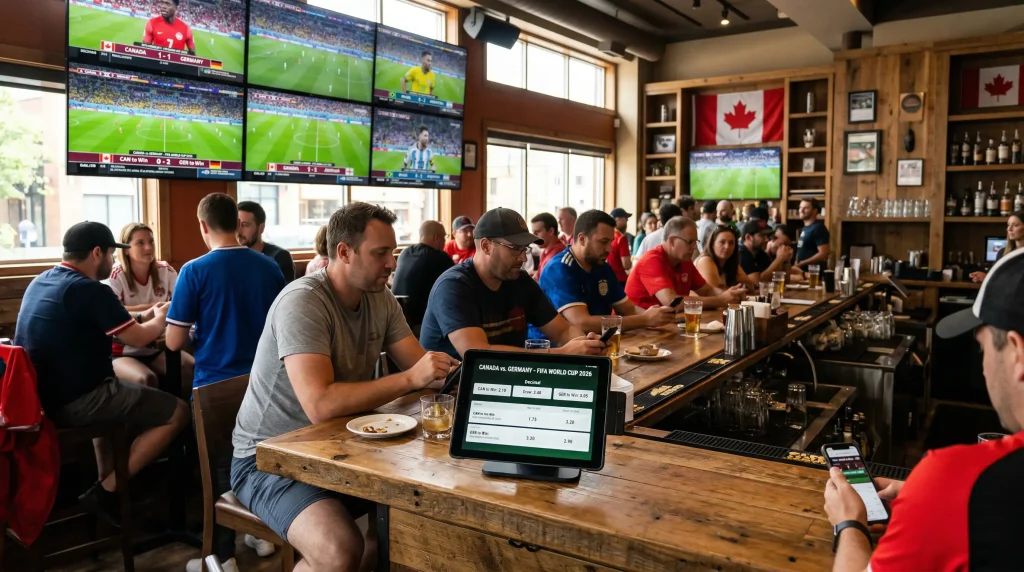
Table of Contents
I placed my first World Cup bet during France 98 — a modest wager on Brazil to lift the trophy that ended with Zinédine Zidane’s head putting paid to my optimism. Nearly three decades and six tournaments later, the game has changed entirely. This summer, for the first time in history, the World Cup lands on Canadian soil, bringing with it a legal betting landscape that would have seemed like science fiction to my younger self hunched over a buddy’s illegal bookie slip in Vancouver.
The 2026 FIFA World Cup betting guide you are reading exists because I watched too many Canadians stumble into sports wagering after Bill C-218 passed in 2021 without understanding the terrain. Single-game betting went from prohibited to provincial overnight, and suddenly everyone from my cousin in Thunder Bay to my barber in Montréal had opinions about moneylines. Most of those opinions were wrong. This guide corrects that — nine years of covering international tournament markets condensed into practical knowledge you can actually use when Canada kicks off against Bosnia and Herzegovina at BMO Field on June 12.
What follows is not a glossy promotional piece designed to push you toward any particular sportsbook. I have no affiliate relationships influencing the advice here. My interest is straightforward: I want Canadian bettors approaching this home World Cup to do so with the same analytical rigour I bring to my own wagering. The 48-team format, the expanded knockout bracket, the three host nations — everything about this tournament operates differently from what you saw in Qatar. Understanding those differences determines whether you find value or simply donate to the bookmakers.
Tournament dates: June 11 to July 19, 2026 — 39 days of football across 16 stadiums in Canada, Mexico, and the United States. Total matches: 104, up from 64 in previous editions. Canadian venues: BMO Field in Toronto and BC Place in Vancouver host 13 combined matches including knockout rounds. Format: 48 teams in 12 groups of four, with the top two plus eight best third-place finishers advancing to a Round of 32. Legal status in Canada: Single-game sports betting fully legal under Bill C-218 since August 2021, regulated at the provincial level. Primary odds format: Decimal, though American moneyline displays remain common due to proximity to US markets.
What’s Different About the 2026 World Cup Format
Sitting in a Doha hotel bar during Qatar 2022, I overheard two English supporters confidently predicting group stage outcomes based on their 32-team mental model. They had no idea that the tournament they were watching would be the last of its kind. Everything changes this June, and if your betting strategy doesn’t account for that transformation, you are operating with obsolete maps in unfamiliar territory.
The expansion from 32 to 48 teams represents the most dramatic structural shift in World Cup history. Twelve groups of four replace the eight groups we knew for two decades. The immediate arithmetic consequence: 24 teams advance from the group stage rather than 16. But the deeper implication concerns the eight best third-place finishers who squeeze through. This mechanism transforms group stage dynamics entirely. A single point — even a fortuitous goal difference — can separate survival from elimination.
Consider the tactical calculus facing managers. In the old format, winning your group mattered enormously because it theoretically delivered an easier Round of 16 opponent. Now, with a Round of 32 inserted before the Round of 16, the bracket pathway becomes significantly more complex. A team finishing third might face a group winner immediately, but the expanded field means more variance in opponent quality. Germany could theoretically meet Curaçao in the first knockout round, or they could draw Colombia. The uncertainty cuts both ways for bettors.
Match scheduling introduces another variable absent from previous tournaments. With 104 games across 39 days, fixture congestion exceeds anything FIFA has attempted before. Some knockout rounds occur with only two days’ rest between matches. Physical conditioning and squad depth become measurable advantages in ways that shorter tournaments obscured. When I build my models for this World Cup, I weight squad rotation capabilities far more heavily than I did for Russia 2018 or Qatar 2022.
The three-host structure affects travel and preparation unevenly. A team drawn into groups staged primarily in Mexico City faces altitude considerations that Vancouver-based opponents avoid entirely. Estadio Azteca sits at 2,240 metres above sea level — a physiological challenge that has historically influenced World Cup outcomes in Mexico. Meanwhile, Canada’s matches occur at sea level in Toronto and Vancouver, granting the home side a subtle but real advantage. I have seen bookmakers undervalue these logistical factors repeatedly in past tournaments. This time, the disparities are larger.
Group stage betting markets will need recalibration because the third-place qualification pathway distorts traditional incentives. Teams might approach final matchdays differently knowing that a draw and decent goal difference could be sufficient. Simultaneously, meaningless matches could increase once group leaders are confirmed, creating over/under value that the old format rarely offered. I intend to monitor how oddsmakers adjust their lines once the tournament begins — historical patterns may not apply.
Finally, the final itself takes place at MetLife Stadium in East Rutherford, New Jersey, on July 19. The venue seats over 82,000 spectators for football configuration, making it the largest World Cup final venue in decades. Futures bettors should note that any path to the final runs through American soil regardless of group stage location. The home advantage calculus extends across three nations, but the culminating matches favour teams comfortable in US conditions.
World Cup Bet Types — From Moneyline to Parlays
My neighbour in Calgary spent the entire 2022 World Cup placing nothing but moneyline bets on favourites, then wondered why his bankroll evaporated despite picking winners at a decent clip. He was laying -300, -400, sometimes -500 prices without understanding that profitable betting requires edge, not just accuracy. Let me walk you through every bet type you will encounter this summer and explain when each makes sense.
Match Bets (Moneyline, Spread, Totals)
The moneyline — called the match result market in some jurisdictions — asks you to pick a winner or the draw. World Cup group stage matches can end in draws, which creates a three-way market fundamentally different from North American sports where ties are resolved. When you see Canada at 2.10 decimal odds against Bosnia and Herzegovina, you collect $2.10 for every dollar wagered if Canada wins in regulation. A draw is a separate outcome with its own price. This structure means that favourite backers face haircuts from draw risk that NFL or NBA bettors never encounter.
Spread betting, sometimes called handicap or point spread wagering, attempts to level mismatches. If Brazil faces Haiti in Group C, the moneyline on Brazil might sit near 1.08 — an absurdly short price requiring you to risk $12.50 to win $1. A -2.5 spread on Brazil instead asks whether they win by three goals or more, typically offered at prices near 1.90. Spreads transform lopsided matches into genuine decisions. I use them extensively for group stage games involving massive talent disparities.
Totals (over/under on goals) focus not on winners but on match tempo. A typical group stage game might carry an over/under line of 2.5 goals. Conditions matter here: early-round matches often produce more goals as teams press for qualification points, while later stages tighten defensively. When Germany plays Curaçao, the total could push toward 3.5 or 4.5, reflecting expected one-sided affairs. I find totals valuable when I lack strong opinions on match outcomes but have situational reads on likely game flow.
Futures and Outright Markets
Futures betting lets you wager on outcomes determined later in the tournament — who wins the whole thing, which team tops their group, which player claims the Golden Boot. These markets open months before kickoff and shift constantly as news, injuries, and form emerge. Locking in Argentina at 5.50 to defend their title today might look prescient if Messi confirms his participation and their price shortens to 4.00 by June.
Group winner markets deserve particular attention because the expanded format multiplies opportunities. With 12 groups, you have 12 separate futures bets available, each carrying distinct value profiles. Groups containing co-hosts like Canada, Mexico, or the United States typically show narrower favourite pricing due to perceived home advantages. Meanwhile, groups lacking a clear favourite — Group F with Netherlands, Japan, Sweden, and Tunisia offers no obvious standout — create wider fields where each contender holds genuine winning equity.
Outright winner bets carry the highest potential returns but the lowest probability of success. France might be offered at 6.00 to win the tournament, meaning a $100 wager returns $600 if they lift the trophy. But even favourites win World Cups less than 20% of the time once variance enters the equation. I approach outright markets seeking value rather than prediction — asking not who will win but whose price exceeds their actual probability.
Prop Bets and Player Specials
Proposition bets cover outcomes within matches or across tournaments that fall outside standard markets. Will Jonathan David score in Canada’s opener? How many yellow cards appear in Argentina versus Algeria? Which minute sees the first goal of the final? These markets invite creativity but also demand sharper analytical work because bookmakers often set them with wider margins.
Player props particularly appeal to bettors who follow specific rosters closely. If you have watched every Lille match and know David’s tendency to arrive late onto cutbacks, you possess information that casual World Cup audiences lack. Anytime scorer markets price regularity of finishing, but underlying shot quality and chance creation vary enormously across competitions. A player thriving in Ligue 1 might find CONCACAF opposition offers different angles.
Team props extend beyond match results into aggregated statistics. Will Canada keep a clean sheet in any group match? Will Mexico score in both halves of their tournament opener? These prop offerings let you express opinions granularly without committing to full match outcomes. I blend team props into broader strategies when match lines offer insufficient value on their own.
Parlays — Canada’s Favourite Bet
Before Bill C-218, Canadian bettors were legally restricted to parlay wagering through provincial lottery corporations. Pro-Line and Sport Select forced you to combine multiple selections into single tickets, preventing single-game betting entirely. That legacy persists culturally: Canadians remain disproportionately attached to parlays compared to American or European bettors. Understanding why parlays carry mathematical disadvantages — and when they nonetheless make sense — matters for the 2026 World Cup.
A parlay multiplies odds across multiple selections. If you combine Canada to beat Bosnia (2.10), Brazil to beat Scotland (1.35), and France to beat Norway (1.45), your combined decimal odds become roughly 4.11. A $20 wager returns approximately $82 if all three hit. The appeal is obvious: small stakes, large potential returns. The problem is equally obvious: losing any leg loses everything.
Bookmakers love parlays because each additional leg compounds the house edge. A 5% margin on a single bet becomes roughly 10% on a two-leg parlay and escalates from there. When I use parlays during World Cups — and I do, selectively — I restrict them to correlated outcomes where one result influences another. A parlay combining Argentina moneyline with under 3.5 goals makes conceptual sense because Argentina’s defensive structure under Scaloni produces low-scoring matches when they control proceedings. Random parlays combining unrelated games are recreational entertainment, not strategy.
For Canadian bettors accustomed to Pro-Line’s parlay-only structure, single-game betting should form the backbone of serious wagering. Reserve parlays for entertainment stakes or correlated constructions where the combined probability exceeds the bookmaker’s implied estimate.
Reading Odds — Decimal, American, and What They Mean for Your Payout
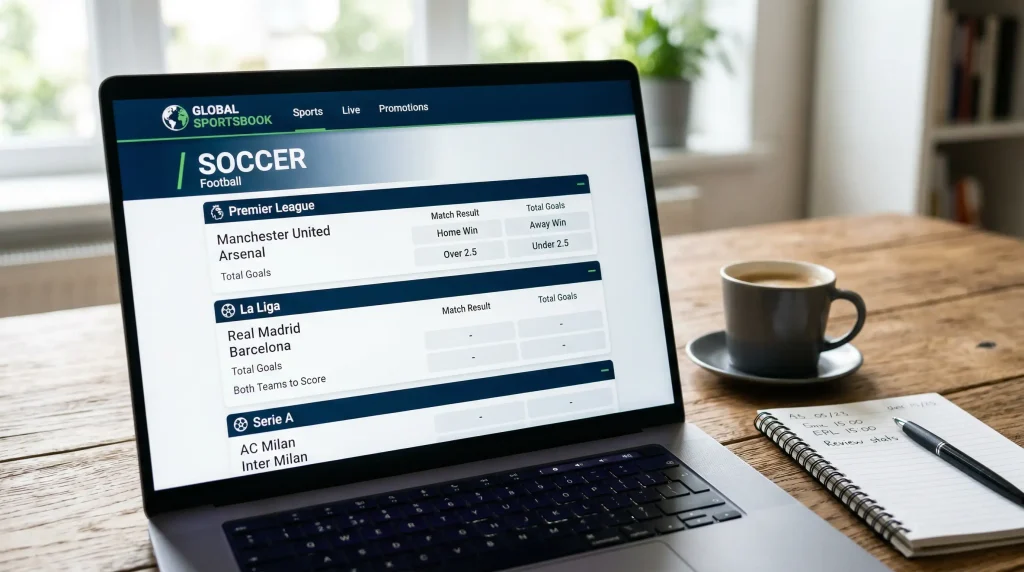
A friend visiting from Manchester once showed me his betting slip displaying 9/4 odds on a Champions League match. I stared at it like he had handed me a document in Aramaic. Canadians operate primarily with decimal odds, occasionally encounter American moneyline notation from US-facing sportsbooks, and almost never deal with fractional formats beloved by British punters. All three systems express identical probabilities — the trick is fluent translation.
Decimal odds tell you exactly what you receive back for every dollar wagered, including your original stake. Canada at 2.10 means a $100 bet returns $210 — your $100 stake plus $110 profit. The math is multiplication: stake times decimal odds equals total return. This simplicity explains why decimal dominates in Canada, Australia, and most of continental Europe. Comparing value across selections requires nothing more than glancing at which number is larger.
American odds split into positive and negative values. Positive odds (+150) indicate how much profit you earn on a $100 stake — in this case, $150. Negative odds (-150) indicate how much you must risk to earn $100 profit. The Toronto-based bettor who sees Canada at +110 should recognize this as roughly 2.10 decimal: a $100 bet yields $110 profit. Converting between formats becomes automatic with practice, but initially, many Canadians find American notation counterintuitive.
The conversion formulas work as follows. For positive American odds, divide by 100 and add 1 to get decimal. So +110 becomes (110/100) + 1 = 2.10. For negative American odds, divide 100 by the absolute value and add 1. So -150 becomes (100/150) + 1 = 1.67 decimal. Most sportsbooks operating in Canada allow you to toggle display formats in settings, but knowing the underlying math helps when comparing lines across multiple books.
Implied probability converts odds into win percentages. For decimal odds, divide 1 by the odds. Canada at 2.10 implies roughly 47.6% win probability (1/2.10 = 0.476). This calculation reveals the bookmaker’s assessment and, crucially, the margin they build into markets. If you believe Canada wins 55% of the time against Bosnia, but the implied probability from odds is only 47.6%, you have found theoretical value — the market underestimates your expected team.
Calculating potential payouts before placing bets prevents unpleasant surprises. On a $50 wager at 3.25 decimal odds, your total return is $162.50, with $112.50 being profit. The same bet at +225 American returns identical amounts — the representation differs, not the economics. I keep a simple spreadsheet to log all wagers with implied probabilities and expected values, regardless of the native format any particular sportsbook displays.
One final note for Canadian bettors: ensure you understand whether displayed odds include your stake. Decimal always does. American displays profit only. This distinction matters when calculating bankroll allocation, which brings us to the next critical topic.
Bankroll Management for a 39-Day Tournament
During France 2018, I watched a friend from Saskatoon — a genuinely sharp handicapper — blow his entire World Cup budget by Day 8. He had winning selections consistently but bet far too aggressively on individual matches. His analytical edge meant nothing once he lacked funds to continue wagering. The 2026 World Cup stretches nearly six weeks, and bankroll discipline determines whether you survive long enough to capitalize on late-tournament value.
The fundamental principle is straightforward: never risk money you cannot afford to lose. Sports betting is entertainment with mathematical edges, not an investment vehicle. Before the tournament begins, I recommend identifying a fixed amount you are comfortable losing entirely — your World Cup bankroll. Maybe that is $200 for a casual bettor or $2,000 for someone more serious. The number matters less than your psychological commitment to treating it as spent money.
Unit sizing standardizes wager amounts relative to bankroll. A common approach allocates 1-3% of bankroll per bet. With a $1,000 bankroll, a standard unit might be $20, with maximum bets capped at $50-60 for highest-conviction plays. This structure ensures that a losing streak — which happens to every bettor regardless of skill — cannot wipe you out in a few bad days. Across 104 World Cup matches, variance will manifest. Sizing manages that variance.
Tournament-specific considerations affect allocation. The group stage runs from June 11-26, featuring 48 matches in just 16 days. Early-round action tempts overcommitment because so many games occur simultaneously. I budget roughly 50-60% of my World Cup bankroll for the group stage, reserving the remainder for knockout rounds when match importance and betting value typically increase. This allocation adapts to the tournament structure rather than spreading money evenly across the calendar.
Avoid chasing losses — the cardinal sin that destroys bankrolls. When Canada drops points to Qatar in an upset, the temptation to double down on subsequent matches feels overwhelming. Resist it. Each bet should be evaluated independently based on expected value, not emotional response to previous results. I keep a physical notebook logging every wager precisely because it forces me to pause and reflect rather than impulsively firing off tickets.
Conversely, winning streaks breed overconfidence. Profitable early results do not indicate that you have somehow cracked the code on World Cup betting. They indicate short-term variance favoured you. Maintain consistent unit sizing regardless of recent outcomes. The worst bankroll management I see involves escalating stakes during hot stretches, because the inevitable correction then erases gains and dips into original capital.
Consider using separate accounts or tracking sheets for World Cup betting versus regular season wagering on NHL, CFL, or other sports you follow year-round. Isolating your tournament bankroll provides clarity on performance and prevents the psychological bleeding where losses in one domain affect decision-making in another. By July 19, you want a clean accounting of how you fared across the World Cup specifically.
How the Group Stage Changes Betting Strategy
The group stage is where World Cup fortunes are made or squandered, and nowhere else is the difference between sharp and recreational betting more apparent. I once watched a group stage unfold where every favourite won and totals landed on the number with suspicious regularity — the books cleaned up on square bettors taking obvious sides. This summer’s expanded format amplifies the complexity because 12 groups means 12 distinct ecosystems of incentives, motivations, and likely outcomes.
Understanding group dynamics requires thinking beyond individual matches. When Canada faces Switzerland on June 24 in Vancouver, the stakes depend entirely on what happened in the first two rounds. If Canada won both openers, they might rest Alphonso Davies with qualification secured. If they dropped points against Bosnia, the Swiss match becomes desperate survival. Oddsmakers adjust lines based on these scenarios, but the sharpest edges often appear when you correctly anticipate lineup rotations or tactical shifts before the market does.
First-round matches typically produce the most goals. Teams enter fresh, managers opt for aggressive setups to secure early points, and fatigue has not yet accumulated. Historical data shows that World Cup group stage openers average higher scoring than subsequent rounds. For the 2026 tournament, I expect this pattern to hold, particularly for co-hosts who carry emotional energy into home venues. Canada’s June 12 match against Bosnia at BMO Field could be precisely this kind of high-event affair.
Second-round matches often involve more tactical caution. Teams that won their openers become protective of advantages. Teams that lost face must-win pressure but against opponents equally desperate. The game theory shifts noticeably. Over/under bets in the second round often find value on unders, particularly in games between evenly matched sides where neither wants to concede.
Third-round matches introduce dead rubber dynamics. By the final matchday of group play, some teams have already qualified, some are eliminated, and others need specific results. In the old 32-team format, roughly a quarter of final-matchday games involved at least one eliminated team. The 48-team expansion increases the number of meaningful matches because the third-place pathway keeps more nations alive longer. Nonetheless, when you identify guaranteed qualifiers resting players against eliminated opponents, massive betting edges can appear on underdogs or extreme totals.
Same-game parlays work particularly well during the group stage when correlations align. If you believe Argentina defeats Jordan comfortably, combining Argentina moneyline with over 2.5 goals and Argentina clean sheet creates a correlated three-leg parlay where all outcomes flow from the same underlying prediction — Argentina dominance. These constructions offer value that the straight moneyline at -400 or worse cannot match.
Live betting — wagering during matches — transforms group stage coverage into continuous opportunity. When a heavy favourite goes behind early, their moneyline odds spike dramatically. If you believe France will equalize and win after conceding to Iraq, the live odds might offer +180 or better where pregame prices sat at -200. I dedicate a portion of my group stage budget specifically to live markets, watching for overreactions to early goals or red cards.
Finally, track your bets meticulously. The group stage involves so many matches that losing track of what you wagered where becomes surprisingly easy. I use a simple spreadsheet logging date, match, bet type, odds, stake, and result. By the time knockout rounds arrive, this data reveals patterns in your own betting that pure memory cannot reconstruct — which leagues you handicap well, which bet types produce positive returns, where your analytical blind spots lie.
Knockout Rounds — When Value Appears
My best World Cup bet ever came in the 2018 quarterfinals when I backed Belgium at plus money against Brazil after watching the South Americans struggle structurally against Switzerland’s press. The market knew Brazil’s reputation; I knew their tactical vulnerability. Knockout rounds compress these evaluation windows into intense, single-elimination stakes where one correct read can define your entire tournament profit. Understanding why value clusters in late rounds — and how to capture it — separates serious bettors from tourists.
The 48-team format introduces a Round of 32 that never existed before. This knockout stage occurs immediately after group play, and bookmakers will have limited historical data to calibrate lines. Teams finishing third in their groups could face group winners — a mismatch on paper — or other third-place qualifiers depending on bracket seeding rules FIFA implements. The novelty creates pricing uncertainty, and pricing uncertainty creates edge for bettors who analyze squad depth and tournament form rather than defaulting to reputation.
Motivation becomes quantifiable in knockout matches because elimination threat focuses attention. A team that coasted through a comfortable group might enter the Round of 32 complacent. An underdog that scraped through on goal difference arrives with nothing to lose. These psychological dynamics are harder to incorporate into models but easier to assess qualitatively through press conferences, lineup selections, and tactical choices in preceding matches. I watch every presser transcript leading into knockout games, looking for tells that reveal mindset.
Extra time and penalties introduce variance that neither team fully controls. When you bet a match moneyline in knockout rounds, draws push to overtime, then potentially shootouts. Favourites hold advantages in 90-minute regulation but see those edges erode once penalty kicks enter the equation. Some bettors focus specifically on draw-no-bet markets that refund your stake if regulation ends level, protecting against the variance of extended play. Others bet intentionally on draws, knowing that extra time favours underdogs by prolonging survival.
Asian handicap markets let you eliminate draw risk entirely. A -0.5 handicap on France against Senegal in a hypothetical Round of 16 pays out if France wins by any margin. The line adjusts to reflect draw elimination — you pay for that certainty through reduced odds. Conversely, +0.5 on Senegal wins if they prevail or draw, covering two of three possible outcomes. These markets are indispensable for knockout betting because they let you express views without draw variance corrupting your positions.
As rounds progress, market efficiency typically increases. By the semifinals and final, so much attention focuses on remaining matches that soft lines become rare. The best knockout-round value often appears in the earliest elimination games — Round of 32 and Round of 16 — before casual World Cup audiences fully engage. Bookmakers rely on general reputation to set lines for less-followed matchups, and those of us who have studied teams closely can exploit the gap between perception and reality.
Hedge appropriately when you hold outright positions. If you bet Canada at 75.00 to win the World Cup before the tournament and they somehow reach the semifinals, your original ticket holds enormous value. You might consider hedging by betting against Canada in specific matches to guarantee profit regardless of outcome. The mathematics of hedging involves accepting reduced upside in exchange for locked-in returns. I rarely hedge completely, but partial hedges let me enjoy knockout drama without facing zero-or-hero stakes.
Is World Cup Betting Legal in Canada? Province-by-Province Breakdown
Standing in a queue at a gas station in Moncton last year, I overheard two guys debating whether online sports betting was actually legal in New Brunswick or whether they were somehow skating by undetected using offshore sites. The confusion was genuine. Canada’s provincial patchwork of gambling regulation bewilders even attentive observers, and the 2026 World Cup will arrive with millions of Canadians still unclear on where they can legally wager. Let me map the terrain.
The foundational change occurred on August 27, 2021, when Bill C-218 — the Safe and Regulated Sports Betting Act — took effect. This federal legislation amended the Criminal Code to permit single-game sports betting, ending the parlay-only restriction that had defined legal Canadian wagering for decades. However, Bill C-218 did not create a national sports betting market. It delegated authority to provincial governments, creating the patchwork that now exists.
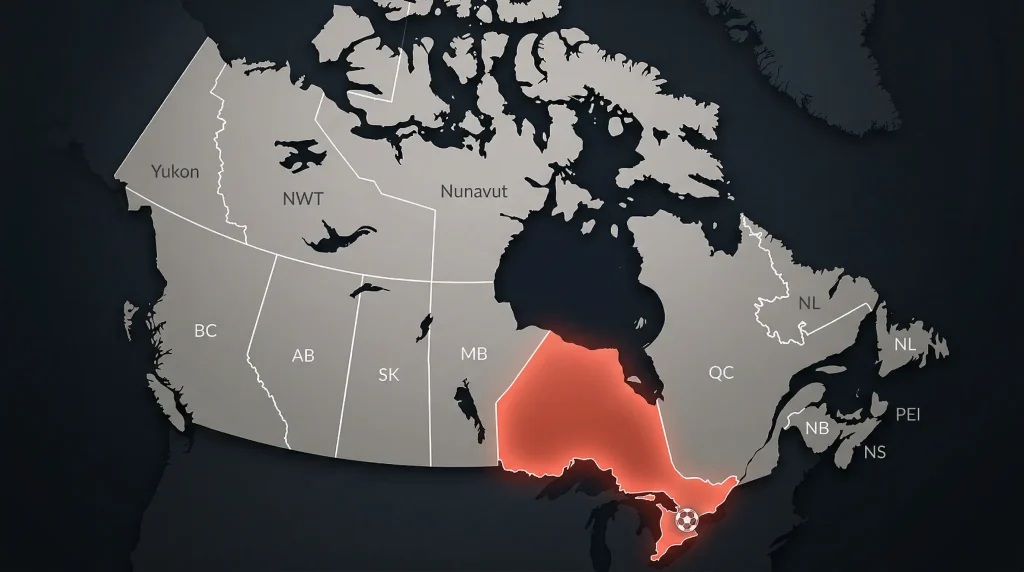
Ontario operates the only open, competitive market in Canada. Since April 2022, private operators can obtain licences through iGaming Ontario (iGO), the subsidiary of the Alcohol and Gaming Commission of Ontario (AGCO). This means an Ontario resident can choose among dozens of legal sportsbooks — familiar names like bet365, FanDuel, BetMGM, and DraftKings all hold Ontario licences alongside international operators. Competition has driven superior odds, bonuses, and user experiences. Ontario bettors access the most robust World Cup betting environment anywhere in Canada.
British Columbia, Alberta, Québec, and other provinces maintain government monopolies on sports betting. In BC, PlayNow.com — operated by BC Lottery Corporation — remains the only legal domestic option. Albertans use PlayAlberta, while Québec residents access Mise-o-jeu through Loto-Québec. These provincial platforms offer sports betting but face no private competition, often resulting in less competitive odds and fewer betting markets than Ontario equivalents. The World Cup will be available on all provincial platforms, but serious bettors in non-Ontario provinces sometimes face frustrating limitations on prop bets, same-game parlays, or live betting options.
Age requirements vary slightly by province. Ontario, BC, and most provinces set the minimum gambling age at 19. Québec, Alberta, and Manitoba permit betting at 18. For the World Cup, verify the applicable age threshold in your province before attempting to open accounts or place wagers.
Offshore sportsbooks continue to operate and accept Canadian bettors despite existing in legal gray areas. Bill C-218 did not criminalize offshore betting for players — it simply established provincial frameworks for legal domestic alternatives. Many Canadians still use unlicensed sites, sometimes because these sites offer better odds or because provincial platforms feel limited. I cannot endorse offshore betting for obvious reasons: consumer protections disappear when disputes arise, and you face currency exchange fees, potential withdrawal complications, and zero recourse if an operator refuses payment.
The advertising environment has tightened significantly since Ontario’s open market launched. AGCO banned the use of athletes and celebrities in iGaming advertising effective February 2024. Bill S-211, currently before the House of Commons, proposes federal restrictions on betting advertisement volume, frequency, and placement that could reshape marketing across Canada before the World Cup arrives. For bettors, this means fewer bonus-laden promotional pitches but also a healthier information environment not designed to exploit impulsive behaviour.
For the 2026 World Cup specifically, I recommend that bettors outside Ontario compare odds across their provincial platform and any available alternative. Ontario residents should absolutely shop lines across multiple licensed books — the variance between operators on the same match can exceed the margin you pay in vig. Our sportsbook overview examines specific operators worth considering.
Common Mistakes Canadian Bettors Make at the World Cup
I keep a file on my laptop titled “errors.txt” — a running catalogue of every betting mistake I have made since I started taking this seriously. The World Cup section alone runs several pages, and I revisit it before every tournament to remind myself how smart people make dumb decisions when emotions run high. Here are the errors I see most frequently among Canadian bettors, errors I have committed myself and watched others repeat.
Overcommitting to Canada is the signature mistake of home-nation supporters. When Canada plays Bosnia on June 12 at BMO Field, the emotional pull toward backing CanMNT will be overwhelming. The atmosphere, the history, the Alphonso Davies Nike commercials — everything points toward laying whatever price the sportsbooks ask. This is precisely when you must interrogate the value objectively. Is Canada’s implied win probability from odds actually lower than their true probability? Or are you paying a premium for the privilege of rooting with money attached? Betting patriotically rather than mathematically has ruined countless bankrolls.
Ignoring draw probability leads to chronic underperformance. In three-way markets, draws represent roughly 25-28% of World Cup group stage outcomes historically. Yet casual bettors disproportionately back winners and rarely consider the draw. When favourites show -180 and underdogs sit at +400, the draw at +280 might actually carry the best expected value — yet it goes unwaged. I force myself to evaluate draw probability for every group stage match rather than defaulting to winner selection.
Chasing losses intensifies during the World Cup because matches occur daily and the urge to recover feels constant. After Canada loses to Switzerland, you might double your stake on the next available match — Argentina versus Austria, say — trying to make up the deficit. This behaviour violates unit sizing principles and introduces emotional decision-making into what should be calculated analysis. Each bet stands alone. Previous results do not change probability assessments for future matches.
Parlay addiction remains endemic among Canadian bettors trained by decades of Pro-Line. The transition to single-game betting legality has not fully dislodged parlay preference. I watch people construct six-leg accumulators combining every day’s favourites, unaware that the compound house edge approaches 40% on such tickets. If you bet parlays exclusively during the World Cup, you are almost certainly reducing your expected returns compared to disciplined single-game wagering.
Neglecting the tournament structure causes strategic blindness. Bettors who wager match-to-match without considering group dynamics, qualification scenarios, and bracket implications miss edges available to those who think systematically. Who has already qualified? Which teams are eliminated and likely to rest starters? How does goal difference affect third-place calculations? These questions should inform every wager after the first round of group play.
Bet sizing based on confidence rather than edge is subtle but destructive. You might feel extremely confident that France beats Iraq, but if the moneyline sits at -350, your edge is minimal regardless of certainty. Conversely, a match where you feel uncertain might carry enormous value at the right price. The amount you wager should correlate with edge — the gap between your assessed probability and the implied probability from odds — not with subjective confidence levels.
Failing to shop lines costs money invisibly. If one sportsbook offers Canada at 2.10 and another at 2.25, taking the shorter price is equivalent to throwing money away. Ontario bettors especially should leverage the competitive market by maintaining accounts across multiple licensed operators and always selecting the best available number. For a high-volume World Cup bettor, line shopping can add several percentage points to overall return on investment across the tournament.
Finally, emotional hedging undermines disciplined positions. You bet Argentina at 5.50 to win outright. They reach the semifinals. Now you panic, hedging aggressively against them in the semi because you cannot stomach the idea of losing your futures ticket. Sometimes hedging makes mathematical sense — but often it reflects fear rather than calculation. Run the numbers before hedging. Know what you are sacrificing and what you are protecting.
The 2026 FIFA World Cup arrives with opportunities Canadian bettors have never previously encountered — a home tournament, legal single-game wagering, and a competitive market structure in Ontario that delivers sharp odds and diverse betting options. What you do with those opportunities depends entirely on preparation. The bettor who approaches June 11 having studied format changes, practiced bankroll discipline, and sharpened analytical frameworks will extract value unavailable to the unprepared.
I have tried to give you the foundation here. The expanded 48-team structure, the bet types and odds formats, the provincial legal landscape, the strategic considerations for group and knockout stages — these pieces assemble into a coherent approach if you take the time to internalize them. Print this guide if you need to. Bookmark it. Reference it when the tournament atmosphere tempts you toward undisciplined decisions.
Canada plays its first home World Cup match in history on June 12 at BMO Field in Toronto. I will be there. The betting slip in my pocket will reflect weeks of careful analysis, not patriotic impulse. That is the difference between betting for entertainment and betting to win. Whatever your stake this summer, approach it with the respect the opportunity deserves.
