
Qatar at the 2026 World Cup — From Hosts to Group B Underdogs
 Available in US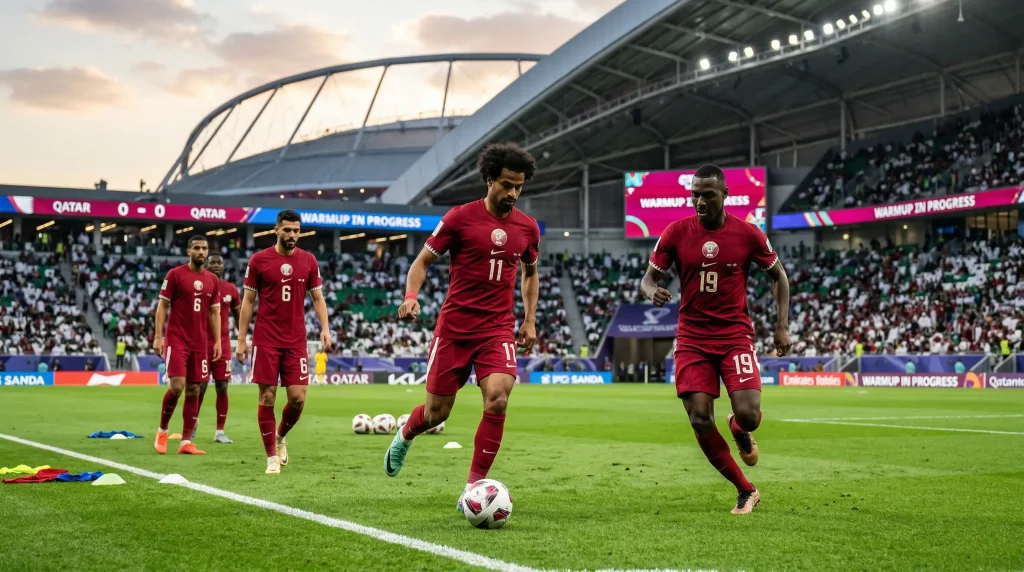
Table of Contents
From hosting the world to visiting North America — Qatar’s World Cup journey continues in dramatically different circumstances. The nation that staged the 2022 tournament, investing billions in infrastructure and preparation, arrives at the 2026 World Cup as Group B’s clear underdog. Their draw placed them alongside Canada, Switzerland, and Bosnia — three opponents whose collective quality suggests Qatari advancement would require results exceeding realistic expectations. For CanMNT supporters, Qatar represents the group fixture where victory seems most probable, but underestimation invites the upsets that tournament football regularly produces.
The 2022 hosting experience provided Qatar something no amount of preparation could otherwise manufacture: the pressure of performing before home crowds with global attention focused on every match. That experience — despite producing three group-stage defeats and zero goals scored — created tournament exposure that visiting nations pay for through decades of qualification battles. Whether that experience translates to competitive improvement four years later shapes how betting markets price Qatar’s 2026 prospects.
Qatar’s Squad — Who’s Left from the 2022 Campaign
The squad that represented Qatar at their home World Cup featured players whose development occurred primarily through the Aspire Academy system that the nation invested heavily in. That system produced technically competent players whose international experience came through Asian competition and preparation tournaments rather than European league play. The 2026 squad represents evolution of this approach — some 2022 veterans remain, supplemented by younger talents whose development continued through similar pathways.
Akram Afif leads Qatari attacking hopes as their most accomplished individual talent. His Asian Cup performances — including the 2024 tournament where Qatar defended their continental title — demonstrated capability that exceeds what World Cup results might suggest. Afif’s technical ability and creative vision provide Qatar’s primary threat, the player through whom their attacking ambitions must flow. His burden is substantial: without Afif producing, Qatar’s attacking alternatives lack the quality to threaten organized defenses.
Almoez Ali’s goalscoring record in Asian competition has produced impressive numbers against regional opposition. Whether that production transfers to World Cup opponents whose defensive quality exceeds Asian alternatives remains the question his 2022 campaign failed to answer — zero goals in three matches. Ali’s movement and finishing suit Qatari attacking patterns, but the step up in defensive quality from Asian to World Cup level may again prove challenging.
The defensive organization that Qatari football has prioritized provides foundation for competitive performances regardless of attacking limitations. Their back line features players whose experience playing together across multiple tournaments creates understanding that time alone cannot replicate. The goalkeeper position offers reliability that limits damage even when results prove disappointing — clean sheets may prove impossible, but preventing heavy defeats remains achievable through organized defending.
The midfield structure features players whose primary responsibilities involve defensive contribution rather than creative inspiration. This profile suits Qatari tactical approach: absorb pressure through organization, then release attackers through transitions when opportunities arise. The approach sacrifices possession in exchange for defensive security — pragmatism that smaller nations often adopt against superior opponents.
Canada vs Qatar — June 18 in Vancouver
The June 18 fixture at BC Place represents Canada’s second group-stage match, arriving after the Bosnia opener. For CanMNT, this match should produce the most comfortable victory of their group campaign — Qatar’s quality does not match Canadian firepower, and home advantage compounds existing talent differential. The primary question involves margin rather than outcome, creating betting markets where spread positions carry more interest than match-winner odds.
The Vancouver setting provides Canada with maximum home advantage against opponents whose World Cup experience came exclusively as hosts. Qatari players will face road atmosphere for the first time at this level — 50,000+ supporters creating environment that their 2022 hosting could not prepare them for. The psychological adjustment from hosting to visiting, from friendly crowds to hostile environments, affects performance in ways that pure squad comparison cannot capture.
The tactical matchup heavily favors Canadian attacking intent. Qatar will attempt defensive organization that limits Canadian chances, but their personnel cannot match what Switzerland or even Bosnia offers in this regard. Canadian patience should eventually unlock Qatari defensive structure, producing goals that establish comfortable leads before match conclusion. The question becomes whether Canada pursues maximum margin or consolidates leads through conservative management.
For Canadian betting purposes, this fixture presents margin markets where value may exist. If Canadian dominance proves as comprehensive as expected, spread positions around -2.5 or -3.0 could provide value that match-winner odds at prohibitive prices cannot. The specific circumstances — home crowd energy, Canada’s need for goal difference advantages, Qatar’s limited defensive capabilities — favor aggressive Canadian approach that produces multiple-goal margins.
Qatar’s Odds — The Group B Long Shot
Qatari tournament winner odds exceed 250.00 at most sportsbooks, reflecting limitations that hosting experience cannot overcome. Their squad quality does not match any Group B opponent, and advancement would require results that probability assessment suggests are effectively impossible. These prices position Qatar as the group’s sacrificial opponent whose primary betting interest centers on spread markets rather than outcome positions.
The case for any Qatar position emphasizes the upset potential that tournament football occasionally produces. A team with World Cup hosting experience, continental championship success, and organized defensive approach can compete on favorable days against overconfident opponents. If Canada or Switzerland approach Qatar fixtures with complacency, the possibility of surprise results exists — not probability, but possibility that longer odds generously reward.
The case against Qatar notes the three-match sample from 2022 that produced zero goals and comprehensive defeats. That performance came with home advantage, prepared facilities, and supportive crowds — advantages that 2026’s away matches cannot replicate. Expecting improvement when circumstances have worsened requires optimism that their competitive record does not support.
My assessment suggests Qatar positions offer minimal value at any price level. Their quality limitations and 2022 precedent create probability assessments so unfavorable that even generous odds cannot overcome. Match-level positions involving Qatar should focus on opponent performance rather than Qatari contribution — betting on Canadian margin rather than Qatari competitiveness.
What 2022 Hosting Experience Taught Qatar
The 2022 World Cup provided Qatar experiences that no preparation camp could replicate. Playing under maximum global scrutiny, facing opponents whose quality exceeded anything Asian competition provides, and managing pressure that hosting nations uniquely face — these experiences theoretically prepare players for subsequent tournament challenges. Whether that preparation manifests in improved 2026 performances remains uncertain.
The negative lessons from 2022 were substantial. Three defeats by combined score of 7-1 demonstrated gaps between Qatari quality and World Cup standards. The attacking production — zero goals across three matches — revealed limitations that Asian Cup success had obscured. The defensive organization, while preferable to complete collapse, could not prevent regular breaching by opponents whose quality exceeded regional competition. These lessons inform realistic 2026 expectations that differ from the optimism hosting nations sometimes develop.
The positive lessons involved tournament management that qualifiers cannot teach. The intensity of World Cup atmosphere, the media attention, the stakes of each fixture — experiencing these elements prepares players psychologically for future tournaments in ways that preparation matches cannot simulate. The 2026 Qatari squad includes players who understand World Cup pressure firsthand, an advantage over genuine debutants whose first exposure comes during competitive matches.
Betting Angles Involving Qatar
My analysis identifies limited opportunities involving Qatar for Canadian sportsbook users:
Canada vs Qatar over 3.5 total goals at prices around 1.85 reflects expected Canadian dominance. Qatari defensive limitations suggest multiple Canadian goals, while their own attacking ambitions may produce goal that extends total beyond defensive-minded scoreline. This market captures expected open play that competitive quality differential produces.
Qatar total tournament goals over 0.5 at prices around 1.50 provides low-return position that their attacking quality should achieve. Across three group-stage matches, the probability of at least one Qatari goal exceeds what 2022 precedent might suggest — their Asian Cup performances demonstrate finishing capability that World Cup defenses may not completely eliminate.
Switzerland vs Qatar winning margin 2-3 goals at prices around 2.50 offers value based on expected competitive dynamics. Swiss professional approach should produce comfortable victory without pursuing excessive margin. The 2-0 or 3-0 Swiss victory represents most probable outcome template.
Qatar to finish last in Group B at prices around 1.40 provides near-certainty exposure that their quality limitations support. Among Canada, Switzerland, Bosnia, and Qatar, the latter’s competitive ceiling clearly falls below alternatives. This market offers low-return base for parlay construction rather than standalone value.
