
Argentina at the 2026 World Cup — Can Messi’s Champions Defend the Title?
 Available in US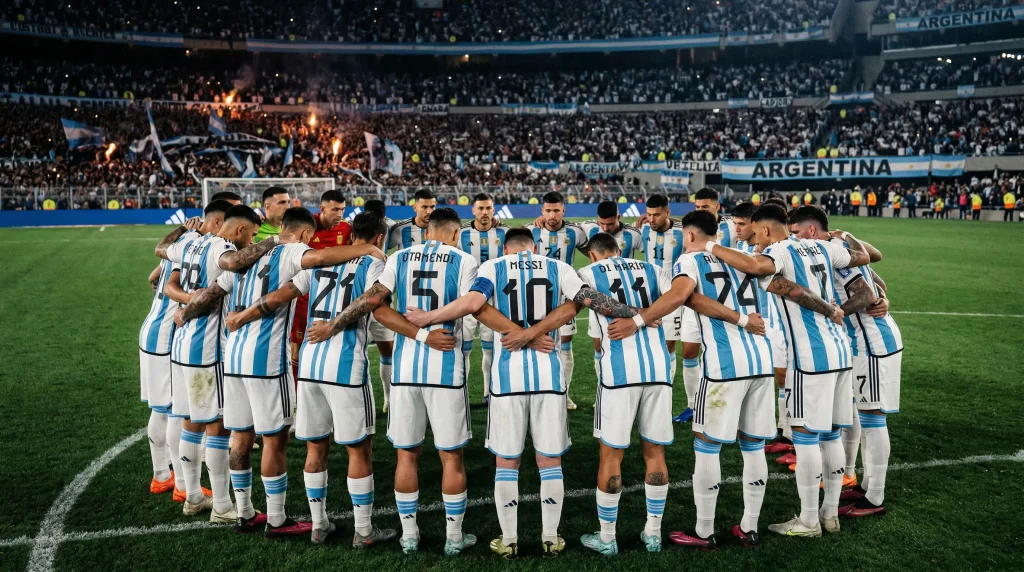
Table of Contents
Will he or won’t he? That question — concerning Lionel Messi and his presence at the 2026 World Cup — drives more betting market speculation than any other individual factor in tournament analysis. I have spoken with sportsbook traders across three continents about this exact issue, and the consensus ranges from “probably playing” to “definitely uncertain.” For anyone wagering on Argentina’s World Cup prospects, understanding Messi’s situation matters more than any tactical breakdown or opponent analysis could.
Argentina enters the 2026 tournament as defending champions, a status that carries both expectation and curse. No nation has successfully defended the World Cup since Brazil in 1962, and the historical pattern suggests that defending champions underperform relative to their pre-tournament odds. Yet this Argentina squad possesses something those previous defenders lacked: a generational talent in Messi whose presence transforms probability calculations, plus a supporting cast that won consecutive Copa América titles alongside the World Cup. The Albiceleste arrive in North America not as fading champions riding reputation, but as a team that has won everything available since 2021.
The Messi Question — Will He Play?
The statistical case for Messi’s importance to Argentina requires no elaboration for anyone who has watched football over the past two decades. But the biological reality confronts those statistics: Messi turns 39 during the 2026 World Cup, an age when even exceptional athletes typically cannot perform at the intensity international tournament football demands. His Inter Miami tenure has featured carefully managed minutes, periodic injury absences, and tactical accommodations that Major League Soccer allows but World Cup opponents will not permit.
My assessment places Messi’s participation probability at approximately 70%, with significant uncertainty about his role if he does participate. A fully fit Messi playing ninety minutes across seven knockout matches seems improbable. A Messi deployed strategically — perhaps starting group matches, perhaps appearing as substitute in knockout rounds — offers more realistic projection. This distinction matters enormously for betting purposes: Argentina with full Messi represents the tournament’s most dangerous side, while Argentina with limited or absent Messi becomes merely one of several quality contenders.
The Argentine Football Association has managed information about Messi’s 2026 intentions carefully, neither confirming nor denying his participation. This ambiguity serves multiple purposes: it maintains media attention, it prevents opponents from preparing specifically for post-Messi Argentina, and it keeps competitive pressure on squad members who might relax assuming Messi’s presence guarantees their inclusion. For bettors, this information vacuum creates inefficiency — markets cannot accurately price Argentine outcomes without knowing their most important variable.
My recommendation is straightforward: avoid locking in long-term Argentine positions until Messi’s participation is confirmed. The price movement between “Messi confirmed” and current uncertainty will likely exceed any edge available from betting early. Once confirmation arrives — probably through an official Argentine federation announcement rather than Messi’s personal media — market recalibration will create brief windows where new information has not fully incorporated into prices. Those windows offer better entry points than current speculation allows.
Argentina’s Squad Beyond Messi — The Depth Chart
Reducing Argentina to “Messi plus ten others” would have been accurate in 2014 or 2018, but the current squad operates with genuine depth that functions effectively even when their talisman rests. The 2022 World Cup demonstrated this evolution: Argentina won knockout matches against Netherlands, Croatia, and France through collective excellence rather than individual brilliance alone. Understanding this depth chart clarifies why Argentina remains dangerous regardless of Messi’s involvement.
Julián Álvarez has emerged as Argentina’s most important forward regardless of Messi’s presence. His movement, work rate, and finishing quality create goal threat independent of service from playmakers. Álvarez scored four goals across the 2022 tournament, including critical strikes against Croatia and France that directly contributed to Argentina’s path to victory. At Manchester City, he has continued developing into one of Europe’s elite centre forwards. His pricing in anytime goalscorer markets typically offers value because casual bettors fixate on Messi while Álvarez often produces higher expected goals per match.
The midfield triangle of Rodrigo De Paul, Enzo Fernández, and Alexis Mac Allister represents tournament-winning quality even by European standards. De Paul’s tactical intelligence orchestrates Argentina’s pressing schemes. Fernández provides the technical quality and passing range that unlocks defensive structures. Mac Allister contributes goal threat from midfield positions that creates problems no tactical setup fully solves. This trio won the World Cup in 2022, won Copa América in 2024, and has accumulated combined Champions League and Premier League experience that prepares them for any opponent.
Defensively, Argentina relies on the continuity that has defined Lionel Scaloni’s tenure. Cristian Romero and Lisandro Martínez compete for centre-back positions alongside Nicolás Otamendi, whose experience compensates for declining physical attributes. Nahuel Molina at right-back provides width and defensive stability, while the left-back position features ongoing competition between several adequate options. Emiliano Martínez in goal offers elite shot-stopping and penalty-shootout expertise that proved decisive in both the 2022 World Cup and 2024 Copa América finals.
The attacking bench includes Lautaro Martínez, whose Inter Milan form suggests he could start for most World Cup participants, and Angel Di María’s potential final tournament appearance. Paulo Dybala, when healthy, provides technical quality that can unlock tight matches. This depth means Argentina can rotate effectively across the expanded 48-team format’s additional matches without significant quality dropoff — a competitive advantage that smaller squads cannot replicate.
Group J — Algeria, Austria, Jordan
The draw placed Argentina in Group J alongside Algeria, Austria, and Jordan — a group that offers straightforward path to qualification without the competitive drama that other groups contain. This draw benefits Argentina’s tournament management: they can prioritize player freshness over point accumulation, rotating key players while still securing advancement.
Algeria returns to the World Cup for the first time since their notable 2014 campaign, where they reached the Round of 16 before losing narrowly to Germany. The Algerian squad has regenerated since then, featuring a blend of European-based professionals and North African league talents. Their physical approach and counterattacking style can disrupt opponents who underestimate their organization, but the talent gap against Argentina remains substantial. Algeria’s value in this fixture lies in margins rather than results — backing Algeria +2.5 or higher in handicap markets offers better expected value than outright positions.
Austria represents the most competitive Group J opponent despite their outsider status. Their pressing intensity under manager Ralf Rangnick produces uncomfortable matches against technically superior sides, and individual talents like Marcel Sabitzer and Christoph Baumgartner can produce goals against any defence. Austria reached the Euro 2024 knockout rounds and has proven capable of elevation when tournament football begins. For betting purposes, Austria’s pricing likely undervalues their potential to take points from Argentina if the champions approach this fixture complacently.
Jordan marks a World Cup debut for a nation whose football development has accelerated dramatically in recent years. Their Asian Cup 2024 run — reaching the final before losing to Qatar — demonstrated tactical sophistication that belied their modest FIFA ranking. However, the jump from Asian competition to World Cup intensity presents challenges that debutants rarely overcome. Jordan will compete earnestly against Argentina but lacks the quality to threaten an upset. Heavy Argentine victories in this fixture represent the most likely outcome.
For Argentina’s group-stage betting, the optimal approach involves backing Argentina to win the group at minimal odds while seeking value in specific match markets. Austria to score against Argentina at around 2.10 offers interesting value given Austria’s set-piece threat and Argentina’s occasional defensive lapses against physical opponents. Argentina winning margin over 2.5 against Jordan prices attractively if you believe Argentina takes the fixture seriously rather than resting key players.
Argentina’s Odds — Defending Champions’ Price
Argentina’s tournament odds have fluctuated significantly based on Messi speculation, ranging from 5.50 when participation seems likely to 8.00 when doubt predominates. This volatility itself presents opportunity — watching for line movements that precede official announcements can signal where sharp money perceives value.
At prices around 6.50 — roughly the current market consensus — Argentina implies approximately 15% tournament-winning probability. This pricing accounts for both their talent advantage over most opponents and the uncertainty surrounding their best player’s involvement. My assessment places Argentina’s true probability slightly higher than market implies if Messi participates meaningfully, and slightly lower if he does not. The current price represents fair value given the information available, neither offering clear edge nor presenting obvious avoid.
Group J winner at around 1.15 offers no practical value — Argentina should top this group regardless of rotation decisions. However, Argentina’s knockout-round progression odds become interesting depending on bracket placement. A Round of 32 match against a Group I third-place finisher (potentially Norway or Iraq) followed by a potential quarter-final against France creates significantly harder path than other possible brackets. Monitoring bracket scenarios before locking in progression bets adds important context.
Argentina to reach the semi-finals prices around 2.50, implying roughly 40% probability. Given their squad quality, tournament experience, and the psychological advantage defending champions carry, this pricing seems slightly generous to Argentina. Semi-final markets may offer the best risk-reward balance for those wanting Argentine exposure without requiring them to win the entire tournament.
Can They Do It Again? What History Says About Defending Champions
The historical record for defending World Cup champions provides sobering context for Argentine optimism. Since Brazil’s 1962 successful defense, every defending champion has either failed to qualify for the next tournament, exited in the group stage, or lost early in knockout rounds. France 2022, Germany 2018, Spain 2014, Italy 2010 — the pattern repeats with remarkable consistency.
Several factors explain this phenomenon. The physical toll of winning a World Cup — the extended matches, the emotional intensity, the compressed recovery before domestic seasons resume — accumulates into fatigue that manifests four years later. Additionally, opponents study champions more intensely than other targets, developing specific tactical approaches designed to neutralize what worked previously. The psychological burden of defending, rather than pursuing, may also contribute to underperformance.
Argentina’s situation differs from recent defenders in meaningful ways. Their 2022 triumph featured a relatively young squad — Álvarez, Fernández, and Mac Allister were all under 25 — meaning the core players arrive at 2026 in their prime rather than their decline. The tactical system Scaloni implemented has remained consistent through Copa América cycles, unlike the wholesale changes some defending champions implement. And the squad’s collective identity appears stronger than previous defenders, whose egos sometimes disrupted team cohesion when results deteriorated.
For bettors, the defending champion curse matters primarily as narrative context rather than statistical predictor. Sample sizes are too small for meaningful inference, and each defending champion’s circumstances differ substantially. Argentina’s odds already incorporate skepticism about successful defense — the pricing would be shorter if markets believed history irrelevant. The question becomes whether you trust this specific squad to overcome historical patterns that other talented teams could not.
Scaloni’s Tactical Evolution and Tournament Management
Lionel Scaloni’s coaching tenure with Argentina began as interim appointment that few expected to become permanent. Yet his tactical approach and man-management have produced results that more celebrated managers could not achieve. Understanding Scaloni’s methods helps predict how Argentina will approach the 2026 tournament and which betting scenarios his decisions create.
The 4-3-3 formation Scaloni typically deploys offers flexibility that adapts to opponent characteristics. Against possession-dominant sides, Argentina can compress centrally while using Messi as release valve. Against direct opponents, the wide forwards press higher while fullbacks provide width in possession. This tactical fluidity means Argentina can compete across stylistic matchups rather than hoping opponents play into their preferred approach. For bettors, this suggests Argentina performs relatively consistently across group-stage diversity — their variance sits lower than teams with rigid tactical identities.
Tournament management represents Scaloni’s underrated strength. His rotation decisions through the 2022 World Cup balanced player freshness against competitive necessity, arriving at the final with a squad physically capable of the extended match that ensued. The expanded 2026 format — with its additional knockout round — demands even more careful management. Expect Scaloni to rotate aggressively through Group J, preserving key players for the bracket’s business end. This rotation creates value opportunities in group-stage match markets where lineups differ substantially from presumed first-choice selections.
Defensively, Scaloni has addressed the vulnerability that plagued previous Argentine sides. The back line under his tenure concedes fewer high-quality chances than the attacking talent sometimes suggests, partly through structured pressing that limits opponents’ build-up options and partly through Emiliano Martínez’s shot-stopping excellence. Clean sheet markets for Argentina offer value when facing inferior opposition, as the defensive organization typically prevents goals even when concentration wavers.
The psychological environment Scaloni has created distinguishes his tenure from predecessors. Argentine dressing rooms historically featured personality conflicts that undermined collective performance. Under Scaloni, the reported atmosphere emphasizes unity — veteran leadership from Messi and Di María alongside hungry younger players creates balance that previous managers could not achieve. This cohesion manifests in late-game situations where tactical discipline persists despite scoreline pressure. Argentina’s 2022 comeback against France in the final demonstrated exactly this quality.
The North American Challenge for Argentina
Argentine football has limited historical exposure to North American tournament conditions, and this unfamiliarity creates potential variables that standard analysis overlooks. The 2026 World Cup presents logistical and environmental challenges that European-based Argentine players have rarely encountered.
Climate represents the most tangible concern. June and July temperatures across the American host cities exceed what European summers typically produce, particularly in venues like Dallas and Houston where Argentine knockout matches might occur. The squad includes several players whose club careers have occurred exclusively in temperate European climates. Adaptation to heat and humidity requires specific preparation that friendly matches and training camps only partially provide. For betting purposes, Argentine performance in afternoon matches during the tournament’s second week — when heat accumulates and fatigue compounds — may decline relative to evening fixtures or group-stage matches before exhaustion sets in.
Travel distances between American venues dwarf what European tournament football involves. Argentine players accustomed to two-hour flights between Champions League fixtures will face cross-continental journeys if the bracket produces geographically dispersed matchups. Recovery protocols must adapt to these realities, and squad depth becomes more important when rest days cannot fully compensate for travel strain.
The Argentine diaspora in North America concentrates in specific cities — Miami, Los Angeles, New York — creating genuine home atmosphere for matches in those venues but neutral or opponent-favoring environments elsewhere. If Argentina draws Canadian knockout opponents, playing in Toronto or Vancouver produces an unusual experience for players accustomed to either home support or hostile away atmospheres. The muted neutrality of Canadian crowds watching two foreign nations compete differs from anything Argentine players regularly experience.
These environmental factors do not fundamentally alter Argentina’s quality advantage over most opponents, but they introduce variance that purely talent-based analysis misses. Weather delays, altitude in Mexico City venues, and travel disruptions could all affect outcomes in ways that betting markets struggle to price accurately.
Argentina Betting Picks — Where We See Value
My Argentina analysis produces the following betting recommendations for Canadian sportsbook users seeking exposure to defending champions:
Wait for Messi confirmation before establishing significant outright positions. The information asymmetry between those tracking Argentine football closely and casual bettors creates opportunity once certainty replaces speculation. Post-confirmation prices may prove less favourable, but the reduced uncertainty compensates for worse odds.
Argentina to win Group J combined with Argentina clean sheet against Jordan at combined price near 1.75 captures two highly probable outcomes efficiently. Argentina’s defensive structure against inferior opposition typically prevents goals, and group victory merely requires not being upset by Austria.
Austria to score against Argentina in their Group J fixture at approximately 2.10 provides value against a complacent favourite. Austria’s pressing intensity and set-piece threat create genuine opportunities, and Argentina’s defensive concentration sometimes wavers in matches perceived as comfortable.
Julián Álvarez top Argentine scorer at the tournament at prices around 3.00 offers value whether or not Messi participates. If Messi plays limited minutes, Álvarez becomes the primary goal threat. If Messi plays more extensively, Álvarez’s movement creates the space that Messi’s passing exploits — either scenario produces Álvarez goalscoring opportunities. His club form and international track record support confidence in this position.
Argentina to reach the semi-finals at prices around 2.50 represents the cleanest value proposition among longer-term markets. The squad quality, tournament experience, and group-stage draw all favour advancement to at least the final four. The price implies roughly 40% probability, which undersells Argentina’s true prospects given the factors enumerated above.
For match-by-match betting during the tournament, I will adjust positions based on lineup announcements and opponent specifics. Argentina’s depth means that strategic rotation creates value opportunities — markets sometimes underreact to rest decisions, pricing matches as if first-choice lineups are guaranteed. Tracking Scaloni’s rotation patterns through the tournament’s opening phase reveals tendencies that inform later match betting.
The meta-observation I carry into Argentina analysis is that defending champions receive excessive scrutiny that distorts perception. Every Argentine weakness will be amplified, every poor performance extrapolated into narrative about their decline. Bettors who maintain calibrated assessment amid this noise — recognizing Argentina’s genuine quality while acknowledging legitimate uncertainty — can identify mispricing that emerges from emotional overreaction to individual results. The championship defense may fail, as history suggests, but the failure will not arrive because markets anticipated it. When value appears in Argentine markets, the opportunity exists because narrative has overwhelmed analysis rather than because fundamental quality has changed.
For Canadian observers, Argentina represents the standard against which our own national team’s progress can be measured. The gap between these programs remains vast, but the mechanisms of development — youth systems, European pathways, tactical sophistication — apply universally. Argentina’s 2022 triumph validated patient investment in football infrastructure, a lesson that Canadian football would do well to internalize as the domestic game expands following the home World Cup. Watching how defending champions navigate tournament pressure provides education beyond betting insight.
