
Germany at the 2026 World Cup — Group E, Odds, and a Game in Toronto
 Available in US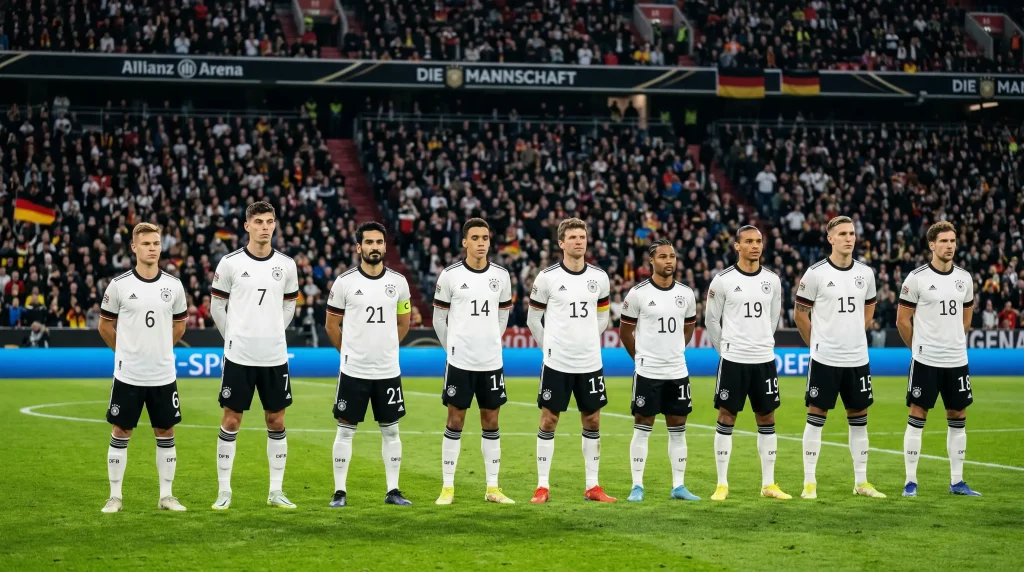
Table of Contents
June 20, 2026. BMO Field, Toronto. Die Mannschaft takes the pitch for a World Cup group stage match on Canadian soil — Germany vs Ivory Coast in Group E. For the thousands of German-Canadians who will fill the stands, and the hundreds of thousands more watching from bars and living rooms across the country, this represents something unprecedented: a chance to support Germany at a World Cup without crossing the Atlantic. The last time Germany played a competitive match in Canada, most of those fans’ parents had not yet been born.
Germany enters the 2026 World Cup as perpetual contenders whose recent tournament performances have swung between embarrassment and excellence with unsettling unpredictability. The 2022 World Cup group stage exit — eliminated alongside Spain by Japan and Costa Rica — followed the identical disaster of 2018, when they failed to escape a group featuring Mexico, Sweden, and South Korea. Yet Germany also reached the Euro 2024 semi-finals on home soil, demonstrating that when conditions align, this squad can compete with tournament favorites. Understanding which Germany appears in 2026 shapes every betting decision involving Die Mannschaft.
Musiala, Wirtz, and Germany’s New Identity
The Müller-Neuer-Kroos era that defined German football for over a decade has concluded. Thomas Müller retired from international duty after Euro 2024. Toni Kroos ended his career entirely. Manuel Neuer, though potentially available, faces competition from younger goalkeepers. This generational transition creates both uncertainty and opportunity — the question is whether Germany’s emerging talents can replicate the success their predecessors achieved.
Jamal Musiala represents the centerpiece of Germany’s attacking future. His dribbling ability in tight spaces produces moments of individual brilliance that German teams historically lacked, preferring systematic approach over creative spontaneity. At 23 during the 2026 World Cup, Musiala combines Bayern Munich experience with international tournament exposure that includes those painful 2022 memories. His development since that disaster has been remarkable: where the 2022 Musiala was a promising youngster, the 2026 version is a genuine world-class talent who can win matches through individual quality.
Florian Wirtz provides the creative midfield presence that complements Musiala’s direct approach. His development at Bayer Leverkusen — particularly during their unbeaten domestic season — established him as one of European football’s elite playmakers. Wirtz creates chances for teammates through passing combinations that unlock defensive structures, offering different attacking pathway than Musiala’s dribbling. Together, they form a dual threat that defenses cannot solve through single marking schemes. Neutralize Musiala, and Wirtz exploits the space created. Focus on Wirtz, and Musiala receives one-on-one opportunities he regularly converts.
The striking position remains Germany’s ongoing challenge. Kai Havertz has established himself as primary option, his Chelsea departure for Arsenal producing the consistent form that earlier career stages lacked. Havertz’s movement creates space for Musiala and Wirtz to exploit, even when his own goalscoring output disappoints. Niclas Füllkrug provides physical alternative — his aerial presence and direct finishing suit certain tactical matchups better than Havertz’s technical approach. The lack of world-class number nine creates vulnerability that Germany must overcome through collective attacking excellence rather than individual striker brilliance.
Defensively, Germany features Antonio Rüdiger’s physical dominance alongside partners who have yet to establish consistent selection. Jonathan Tah’s Bundesliga performances suggest first-choice status, but tournament football demands defensive reliability under pressure that league matches cannot replicate. The full-back positions offer athleticism through Joshua Kimmich (often deployed in midfield but capable at right-back) and David Raum’s left-sided attacking thrust. The defensive midfield role — so crucial to German success across previous generations — features multiple options without clear hierarchy.
Marc-André ter Stegen brings Barcelona experience to the goalkeeping position, his distribution ability suiting Germany’s build-up preferences better than pure shot-stopping alternatives. The debate over whether ter Stegen or Neuer should start has occupied German football media for years, but the 2026 World Cup likely sees ter Stegen as first choice with younger alternatives providing backup depth.
The depth positions reveal both German football’s talent production and its current limitations. Leroy Sané provides explosive pace on the wing, though his inconsistency frustrates supporters who recognize his world-class ceiling. Serge Gnabry offers similar profile with similar inconsistency concerns. The midfield includes options like Leon Goretzka and Emre Can whose physical presence suits certain tactical matchups. This depth allows rotation without catastrophic quality dropoff — important across a tournament demanding seven matches for the eventual champion.
Julian Nagelsmann’s appointment as national team manager brought tactical ambition that predecessor Hansi Flick’s tenure lacked. Nagelsmann’s Bayern Munich experience demonstrated willingness to adapt formations and personnel based on opponent analysis, a flexibility that tournament football rewards. His Euro 2024 campaign produced encouraging performances that restored confidence after the 2022 debacle. Whether he can translate domestic management success into World Cup progression remains the defining question for German 2026 prospects.
Group E — Curaçao, Ivory Coast, Ecuador
Germany’s Group E draw provides favorable path to knockout rounds while featuring opponents who cannot be dismissed as certain defeats. Curaçao, Ivory Coast, and Ecuador each present distinct challenges that test different aspects of German capability. The scheduling places the Toronto match — Germany vs Ivory Coast — as the group’s marquee fixture for Canadian audiences.
Curaçao’s World Cup debut represents one of the tournament’s most compelling underdog stories. Their qualification through CONCACAF playoff demonstrated competitive improvement that smaller Caribbean nations rarely achieve, but their squad lacks the individual quality to threaten German advancement. For betting purposes, this match creates margin markets where Germany should win comfortably — the question becomes degree of dominance rather than result. Germany -3.5 Asian handicap represents aggressive pricing that German attacking talent could justify, though defensive lapses that plagued recent tournaments create downside risk.
Ivory Coast brings African football’s combination of physical athleticism and technical ability that has troubled European sides throughout World Cup history. Their squad features players from top European leagues — including Premier League and Ligue 1 regulars — who understand the standards required at this level. The Toronto setting for Germany vs Ivory Coast adds narrative dimension: German-Canadian supporters facing Ivorian diaspora communities who also call Canada home. The atmosphere should prove electric, with both supporter groups claiming vocal presence at BMO Field.
Ecuador returns to World Cup knockout consideration after their 2022 campaign featured competitive performances despite ultimate group-stage exit. Their high-altitude home advantage does not apply in North American venues, but the squad features players who have developed further since Qatar. Ecuador’s pressing intensity can disrupt teams who expect composed possession football, creating transitional opportunities that their attacking players can exploit. Germany must demonstrate the tactical flexibility to handle this disruption without surrendering defensive structure.
The group winner likely faces a weaker Round of 32 opponent than the second-place finisher, creating incentive for Germany to pursue maximum points rather than merely secure qualification. This competitive motivation suggests Germany deploys full-strength lineups throughout group stage, including the Toronto fixture against Ivory Coast.
Germany vs Ivory Coast in Toronto — June 20 at BMO Field
The Germany vs Ivory Coast fixture at BMO Field carries significance beyond its Group E implications. For Canadian football fans, this match brings World Cup atmosphere to familiar venue. For German-Canadian communities, it offers home-continent access to Die Mannschaft that previous World Cups could not provide. For neutral bettors, it creates market dynamics influenced by local factors that pure analytical assessment might miss.
BMO Field’s capacity limitations mean ticket demand dramatically exceeds supply for this fixture. The German-Canadian population in Greater Toronto Area — one of the largest German diaspora communities in North America — treats this match as generational event. Parents who immigrated decades ago will attend with children and grandchildren who may never have seen Germany play live. This emotional investment produces stadium atmosphere that could approximate home advantage for German players unaccustomed to hearing German chants at competitive fixtures outside Europe.
The June 20 date places this match during the group stage’s second matchday, meaning both teams enter with clear understanding of their positions. If Germany defeats Curaçao in their opener (the expected outcome), they face Ivory Coast knowing that victory would effectively guarantee knockout qualification. Ivory Coast’s opening result against Ecuador determines their own desperation level — defeat to Ecuador would make the Germany match must-win, while victory would allow more tactical flexibility. These permutations affect match dynamics that betting markets must price accordingly.
For Toronto-based bettors, the local fixture creates information advantages that remote observers cannot replicate. Training ground observations, local media access, and atmosphere assessment provide context that national coverage lacks. The German team’s base location during group stage — potentially within driving distance of Toronto — affects preparation and travel fatigue differently than teams based in distant American cities. These practical factors influence match outcomes beyond pure squad comparison.
The betting markets for this specific fixture deserve attention beyond Germany’s overall tournament odds. Germany vs Ivory Coast match winner prices reflect expected German dominance, but the specific circumstances — Toronto venue, diaspora atmosphere, group stage context — create nuances that general German odds do not capture. First-half spreads, correct score markets, and player props all offer angles where the Toronto dynamic might create exploitable inefficiencies.
Germany’s Betting Odds
Germany’s tournament winner odds around 10.00 to 13.00 position them behind the clear favorites but ahead of most contenders. This pricing reflects their talented squad while incorporating the group-stage collapses of 2018 and 2022 that damaged German tournament credibility. Whether this skepticism creates value or accurate assessment depends on how you weight recent disasters against longer historical excellence.
The case for Germany at these odds emphasizes generational talent finally maturing into tournament-ready form. Musiala and Wirtz will be at or near peak ages for the 2026 World Cup. The defensive personnel have accumulated experience since 2022’s failures. The coaching situation, while involving recent transition, brings fresh perspective unburdened by previous disappointments. If everything aligns — and German football excellence historically produces alignment more often than not — this squad possesses ability to reach the semi-finals or beyond.
The case against Germany at these odds notes the absence of world-class striker, the defensive vulnerabilities that produced recent embarrassments, and the psychological baggage that consecutive group-stage exits create. German players approaching the 2026 World Cup carry pressure that other nations’ squads do not — the expectation that four-time champions should contend, combined with the memory that recent teams have dramatically underperformed that expectation. How they handle this pressure shapes outcomes more than pure talent assessment suggests.
My assessment places Germany’s true probability near their market-implied odds, making them neither clear value nor clear avoid. The price around 10.00 reflects appropriate skepticism without dismissing genuine quality. For tournament betting, Germany represents high-variance position: if they recapture their historical excellence, their odds provide solid return, but if 2018-2022 patterns resurface, the position loses entirely. Portfolio construction that includes Germany at these prices suits bettors comfortable with this variance profile.
Group E winner odds around 1.25 provide lower-risk German exposure that avoids knockout-round uncertainty. Germany should navigate this group successfully, likely finishing first, and this market captures expected group-stage performance without requiring deep tournament progression. The pricing reflects German dominance without overvaluing it.
The progression markets offer alternative exposure based on bracket advancement expectations. Germany to reach quarter-finals at prices around 2.00 requires merely winning two knockout matches after group qualification — achievable given expected favorable Round of 32 opponent. Germany to reach semi-finals around 4.50 adds the quarter-final hurdle where elite opposition typically appears. These tiered markets allow bettors to calibrate exposure based on confidence level in German tournament consistency.
Head-to-head markets between Germany and other contenders create speculative opportunities before bracket paths become known. Germany vs France prices, Germany vs England prices, and Germany vs Argentina prices all attract betting interest despite these matchups requiring specific bracket outcomes. The historical weight these rivalries carry influences pricing beyond current squad comparison — an inefficiency that analytical bettors can potentially exploit when emotional betting pushes prices in predictable directions.
Germany Picks and Value Angles
My analysis of Germany’s World Cup 2026 betting landscape identifies several positions offering value for Canadian sportsbook users:
Musiala to score 3+ tournament goals at prices around 3.00 captures his expected involvement across Germany’s probable knockout participation. If Germany reaches quarter-finals or beyond, Musiala playing five or six matches creates sufficient opportunities for this threshold given his scoring frequency from advanced positions. His tendency to arrive in dangerous areas during attacking sequences — combined with quality finishing when chances appear — makes this goalscoring accumulator viable.
Germany vs Curaçao over 4.5 total goals at approximately 2.00 reflects expected German dominance against tournament debutants. Curaçao’s defensive capabilities, while improved through their qualification journey, remain insufficient to contain German attacking variety across 90 minutes. Their own attacking ambitions — necessary to compete rather than merely survive — create additional goal probability beyond German scoring alone. High-scoring German victories against inferior opposition have characterized their recent competitive history despite overall tournament struggles.
Germany vs Ivory Coast under 2.5 total goals at approximately 1.95 provides contrarian position on the Toronto fixture. Both teams possess defensive organization capable of limiting opposition chances, and the competitive stakes — both teams likely playing for knockout-round positioning — favor cautious tactical approaches. The public money attracted by the Toronto fixture’s profile may push overs prices lower than analytical assessment supports, creating value on the unders position.
Wirtz to receive most assists for Germany during group stage at prices around 4.00 offers value based on his creative profile. While Musiala attracts defensive attention through dribbling threat, Wirtz operates in spaces that produce final-ball opportunities. His passing accuracy and vision create assist potential that pure goalscoring markets do not capture. This prop market provides exposure to Wirtz’s influence without requiring him to score directly.
For longer-term positions, Germany to reach semi-finals at prices around 4.50 captures expected progression beyond group stage without requiring final appearance. Their bracket path from Group E likely produces manageable Round of 32 and Round of 16 matchups before elite opposition in quarter-finals. This market construction acknowledges German quality through preliminary rounds while allowing for the knockout-round disappointments that have plagued recent campaigns.
Germany total tournament goals over 8.5 at prices around 1.90 provides team-level exposure that bypasses individual scorer uncertainty. With Musiala, Wirtz, Havertz, and multiple supporting attackers all contributing, Germany’s collective goalscoring should clear this threshold across their expected four-to-six tournament matches. The lack of dominant individual striker distributes goals across multiple players, making team total markets more predictable than individual Golden Boot positioning.
Havertz to score in any knockout match at prices around 2.75 offers value based on his historical tournament performances. Arsenal’s development of his overall game has not diminished his finishing ability in decisive moments. The knockout-round stage where matches carry elimination stakes suits players whose concentration peaks under pressure — a characteristic Havertz has demonstrated across multiple competitions. This prop market captures his knockout potential without requiring group-stage production that Germany’s other attackers may claim.
The Alphonso Davies Factor — Bayern’s Link Between Canada and Germany
Alphonso Davies creates unique narrative connection between Canadian and German football that the 2026 World Cup highlights. Davies has played alongside several German national team members at Bayern Munich — including Musiala, Leroy Sané, and Joshua Kimmich — creating personal relationships that transcend national team competition. When Germany faces other opponents while Canada competes in Group B, these Bayern connections produce rooting interests that blur traditional national loyalties.
The Toronto German-Canadian community includes many Bayern Munich supporters who have watched Davies develop from teenage acquisition into world-class full-back. Their emotional investment in Davies’ success extends to cheering for CanMNT alongside their primary German allegiance. When Germany plays their Toronto fixture against Ivory Coast, the crowd will include supporters whose favorite club features both German national team players and Canada’s biggest star.
For betting analysis, the Davies connection matters primarily for understanding Canadian market sentiment toward German positions. Ontario sportsbooks serve populations with split loyalties that affect betting patterns. German matches may attract unusual public money from Canadian bettors who feel connection through Davies’ Bayern relationships, creating potential market inefficiencies that pure analytical assessment would not predict.
The hypothetical scenario of Germany facing Canada in knockout rounds — mathematically possible if both nations advance from their groups and bracket paths converge — would create the tournament’s most emotionally complex narrative for Canadian audiences. German-Canadians choosing between homeland and adopted country, Bayern supporters watching Davies face his clubmates, and neutral observers appreciating the drama of small-nation Canada challenging four-time champions Germany. While bracket predictions cannot rely on such matchups occurring, their possibility adds dimension to how Canadian bettors should think about German tournament progression.
The practical implications extend to viewing culture during the tournament. German cultural clubs across Canada — particularly strong in Kitchener-Waterloo’s German heritage community — will host viewing events that bring together multiple generations of German-Canadians. These gatherings create information networks where sentiment and expectation circulate among supporters with genuine cultural connection to German football. For bettors seeking qualitative insight beyond statistical analysis, these communities provide valuable perspective on German team morale, tactical expectations, and emotional readiness that pure numbers cannot capture.
Davies himself has spoken publicly about the unique position his Bayern career creates during international competition. His respect for German teammates combined with competitive drive for Canadian success produces nuanced perspective that reflects the broader German-Canadian community’s divided loyalties. When Germany succeeds — provided Canada also progresses — many Canadian supporters will feel vicarious satisfaction through Davies’ relationships with his celebrating clubmates.
