
Group A Predictions — Mexico Opens the 2026 World Cup
 Available in US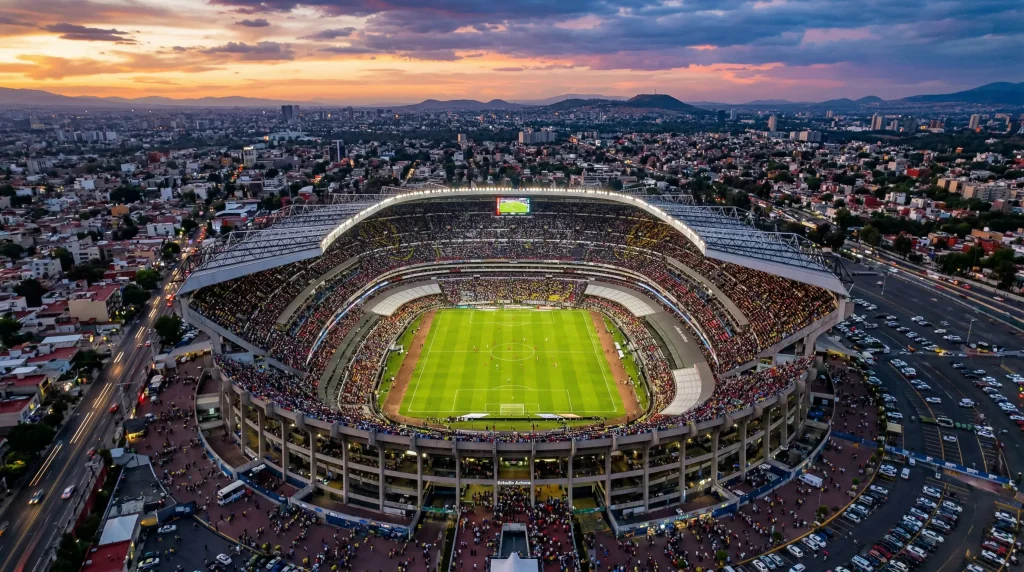
Table of Contents
June 11, 2026. Estadio Azteca. Mexico versus South Africa. The 2026 FIFA World Cup begins where it has begun twice before — in football’s most intimidating colosseum, at 2,200 metres above sea level, where the thin air has broken European sides for decades.
The opening match of any World Cup carries symbolic weight beyond its three points. When Mexico walks out at the Azteca to face South Africa, they won’t just be chasing a result — they’ll be representing an entire continent’s footballing pride as hosts. The pressure is familiar territory for El Tri, but the composition of Group A presents challenges that could derail their campaign before it truly starts.
South Korea arrives as the strongest Asian qualifier, Czechia earned their spot through a gruelling UEFA playoff, and South Africa qualified automatically as hosts through the African zone (CAF’s allocation increased to 9.5 slots for 2026). This isn’t a straightforward group for anyone, and the betting markets reflect genuine uncertainty about the finishing order.
Mexico, South Korea, South Africa, Czechia — Group Breakdown
Every four years, pundits declare Mexico’s “golden generation” has arrived, only to watch El Tri crash out in the Round of 16 — the infamous “quinto partido” (fifth match) curse that has haunted Mexican football since 1994. The 2026 squad might finally break that pattern, but they’ll need to navigate Group A first.
Mexico enters as co-hosts with a squad that blends veterans and emerging talents. Hirving Lozano, now 30, remains the attacking focal point after his move from Napoli to San Diego FC in MLS. The domestic pivot hasn’t dimmed his threat — if anything, playing in North American conditions has sharpened his fitness. Santiago Giménez anchors the front line following two exceptional seasons with Feyenoord, where his physicality and finishing made him one of Europe’s most coveted strikers.
The managerial situation stabilised with Javier Aguirre’s return for a third stint in charge. Aguirre knows the Azteca’s peculiarities intimately — the altitude that saps opponents, the deafening crowd noise, the psychological edge that comes from playing where Mexico has lost just four competitive home matches this century. His 4-3-3 system prioritises defensive solidity without sacrificing width, asking full-backs to provide attacking thrust while Edson Álvarez marshals the midfield base.
South Korea presents the group’s most balanced challenge. The Taegeuk Warriors qualified by topping their AFC group, winning eight of ten matches with a +23 goal difference. Son Heung-min remains the talisman despite entering his mid-30s, his Tottenham form suggesting he has one more major tournament peak remaining. Hwang Hee-chan provides the running power that Son once offered, stretching defences from the opposite flank.
Manager Jürgen Klinsmann — yes, that Klinsmann — took charge in 2024 and immediately imposed a more aggressive pressing style than South Korea typically deploys. The early results were mixed, but by the 2025 Asian Cup (where South Korea reached the final, losing to Japan on penalties), the system had clicked. South Korea’s strength lies in their collective fitness and willingness to press from the front. Their weakness remains aerial vulnerability — a concerning trait given Mexico’s set-piece delivery.
Czechia scraped into the tournament through the most difficult path in European qualification. After finishing third in their group behind Portugal and Poland, they entered the playoff bracket as an unseeded team. A 2-0 win over Georgia in the semifinal set up a final against Sweden, where extra time goals from Tomáš Souček and Patrick Schick secured a 2-1 victory and a fourth consecutive major tournament appearance.
This Czech squad lacks the star power of the 2004 generation that reached the Euro semifinal, but compensates through organisation and set-piece proficiency. West Ham’s Souček remains the attacking threat from midfield, his late runs into the box generating goals that more naturally gifted players might envy. Manager Ivan Hašek emphasises defensive discipline — Czechia conceded just six goals across their twelve qualifying and playoff matches.
South Africa returns to the World Cup for the first time since hosting in 2010, when Bafana Bafana became the only host nation ever eliminated in the group stage. This squad has something to prove beyond mere participation. Themba Zwane orchestrates from midfield, while Percy Tau’s pace provides the outlet for counter-attacks. South Africa qualified by winning AFCON 2025 (CAF’s automatic qualifier for the World Cup), demonstrating they can perform when stakes are highest.
The weakness for South Africa is experience at the World Cup level. Only Tau played in 2010, as a youth squad member who never made the pitch. The entire squad will be experiencing football’s grandest stage for the first time in competitive action — a factor that historically disadvantages African nations against tournament-hardened opponents.
Group A Schedule and Venues
Group A kicks off the entire tournament, meaning its results will set the tone for everything that follows. The scheduling hands Mexico a significant structural advantage — all three of their matches occur at Estadio Azteca in Mexico City.
The opening match on June 11 — Mexico versus South Africa — is scheduled for 5:00 PM local time, 7:00 PM ET. This Wednesday evening slot provides optimal viewing across North America and ensures a frenzied atmosphere inside the 87,000-capacity Azteca. Simultaneously, South Korea faces Czechia at Estadio Akron in Guadalajara.
Matchday two arrives on June 16, with South Korea versus South Africa at BBVA Stadium in Monterrey and Mexico versus Czechia at the Azteca. Both matches kick off at 4:00 PM local time. By this point, the group picture will have sharpened considerably.
The final matchday on June 22 sees concurrent kickoffs: Mexico versus South Korea at the Azteca and Czechia versus South Africa at Akron. All four teams will know exactly what they need, and the 3:00 PM local start allows for maximum drama in North American viewing.
What stands out is Mexico’s travel advantage. They never leave Mexico City, sleeping in their own beds while opponents navigate a country spanning three time zones. South Korea and Czechia both face the Guadalajara-Monterrey hop (roughly 500 kilometres) between matches, while South Africa bounces between all three host cities. This logistical burden won’t decide outcomes, but it contributes to Mexico’s built-in edge.
Group A Odds and Who Advances
The betting markets have priced Mexico as clear group favourites, but the margins are tighter than you might expect given the home advantage. Current odds position Mexico at 1.70 to top the group, South Korea at 3.50, Czechia at 6.00, and South Africa at 11.00.
For qualification (top two finish), Mexico sits at 1.20, South Korea at 1.65, Czechia at 2.50, and South Africa at 4.50. These numbers suggest approximately 83% probability for Mexico, 60% for South Korea, 40% for Czechia, and 22% for South Africa — the margins reflecting bookmaker edge but showing South Africa as the underdog worth monitoring.
The value question centres on South Korea. At 3.50 to win the group and 1.65 to qualify, the Koreans offer reasonable returns if you believe their quality can match Mexico despite the venue disadvantage. Their direct matchup occurs on the final day at the Azteca — if South Korea arrives at that match needing a draw to win the group, their defensive capability makes that scenario plausible.
Czechia presents a more speculative proposition. The 2.50 qualification odds suggest roughly 40% probability, which feels correct given their path requires beating South Africa and stealing at least a draw from one of the group’s stronger sides. Souček’s set-piece threat keeps them dangerous in any match, but creating from open play remains a weakness that Mexico and South Korea can exploit.
South Africa at 4.50 to qualify represents the genuine longshot play. Their AFCON triumph proves they can win tournament football, and if Mexico stumbles in the opener — not impossible given the pressure of hosting duties — suddenly the mathematics change dramatically. I wouldn’t bet heavily here, but a small position at those odds has mathematical justification.
Prop markets offer additional angles. Mexico’s team total goals over/under sits at 5.5, with the over priced at 1.90. Given three home matches against varied opposition, I’d lean toward the over. South Korea’s first scorer odds place Son at 5.00 for the tournament — excellent value for a player who typically starts strongly in major competitions.
The Match to Watch — South Korea vs Mexico
Every group contains one fixture that determines the final standings. In Group A, that match arrives on June 22: South Korea versus Mexico at Estadio Azteca.
These nations share World Cup history. In 1998, South Korea’s 3-1 victory over Mexico at the Azteca remains one of the most shocking results in tournament history — the only time Mexico has lost a World Cup match on home soil. That defeat still stings in Mexican football circles, and the rematch carries emotional weight beyond the points at stake.
Tactically, the matchup favours Mexico. Klinsmann’s high-pressing system will struggle in Mexico City’s altitude, where South Korean players will tire faster than they’re accustomed to. But if Son can isolate Mexico’s full-backs in one-on-one situations — particularly veteran right-back Jorge Sánchez, whose pace has diminished — South Korea’s counter-attacking threat becomes formidable.
My expectation is that Mexico enters this match already qualified, needing only a draw to secure top spot. South Korea will likely need a result to guarantee advancement. This dynamic could produce a cagey affair where both sides respect each other’s capabilities without committing numbers forward recklessly.
The betting angle here involves live wagering. If South Korea scores first — and their counter-attacking quality makes this plausible — the in-play odds on Mexico will spike dramatically. Mexico’s ability to come from behind at home is well-documented, and panicked bettors will overcorrect, creating value on El Tri that didn’t exist pre-match.
Our Group A Prediction
After analysing the squad qualities, venue advantages, and historical patterns, here’s how I see Group A finishing:
First place: Mexico, 7 points. Wins over South Africa (2-0) and Czechia (2-1), plus a draw against South Korea (1-1) in a match where both sides play conservatively. Goal difference of +4. The Azteca factor proves decisive, and Mexico enters the knockout rounds with genuine belief they can finally reach the quarter-finals.
Second place: South Korea, 5 points. Victory over Czechia (2-0) in the opener, a draw against South Africa (1-1), and the aforementioned draw with Mexico. Goal difference of +2. Son Heung-min provides the individual brilliance that separates South Korea from the group’s other challengers.
Third place: Czechia, 4 points. A loss to South Korea followed by a draw against Mexico (0-0, a result that suits both teams) and a narrow win over South Africa (1-0). Goal difference of 0. Four points should be sufficient for a best third-place spot, keeping Czechia’s tournament alive despite never quite dominating any match.
Fourth place: South Africa, 1 point. The AFCON champions find the World Cup step-up too steep. A draw against South Korea, losses to Mexico and Czechia, and an early exit that nonetheless provides valuable experience for a young squad building toward 2030.
Group A won’t produce the drama of other groups featuring traditional powers, but the opening match spectacle and South Korea’s genuine threat ensure compelling viewing. For Canadian bettors, the time zones align perfectly — every Group A match occurs in Eastern time between 3:00 PM and 8:00 PM, allowing comfortable viewing without late-night commitments.
